Meet the Expert special edition: Floria Sigismondi at AANT

On April 14, AANT – Academy of Art and New Technologies hosted a new event in the Meet the Expert series, dedicated to direct engagement with leading figures from the international creative scene. The special guest was Floria Sigismondi, an Italian-Canadian artist and one of the most influential figures in the contemporary visual landscape.

With a distinctive aesthetic language, suspended between dreamlike vision and unsettling tension, Sigismondi has developed over time a powerful and recognizable visual universe. Her practice spans photography, video art and film direction, playing a key role in shaping the iconic imagery of some of the most prominent figures in international music, including David Bowie, Marilyn Manson, Björk and Rihanna.

The event offered undergraduate students a valuable opportunity to explore creative processes and production dynamics that define contemporary visual arts, with a particular focus on the dialogue between visual culture, music and the cultural industry. The talk was moderated by Alessandro Alfieri, AANT faculty member, and Ivan D’Alberto, contemporary art theorist and historian, who guided the discussion with the artist, fostering reflections on aesthetics, languages and innovation.

About the guest: Floria Sigismondi was born in Pescara and raised in Canada. Her career spans photography, video art and directing, fields in which she stands out for a strongly authorial and recognizable visual style. She has directed music videos for some of the most important international artists, contributing to redefining the visual language of music videos from the 1990s to the present. Alongside her work in music, she has exhibited in major international museums and galleries and has directed film and television projects, consolidating a multidisciplinary practice that combines art, storytelling and visual experimentation.

AI and Knowledge: GeniaLAB presents “Generative Knowledge” by Paolo Granata

On Monday, April 13, AANT – Academy of Art and New Technologies hosted a new event in the geniaLAB series, a format dedicated to exploring contemporary languages and the cultural transformations driven by innovation. 

At the core of the meeting was the presentation of Generative Knowledge by Paolo Granata, a volume that offers a critical and in-depth analysis of the ongoing changes in the processes of knowledge production and transmission that seeks to answer an increasingly urgent question: what does it mean to know, to learn, and to create in the age of AI?

Artificial intelligence, in fact, is not merely a technological tool, but is profoundly reshaping the ways in which knowledge is generated, shared, and applied.

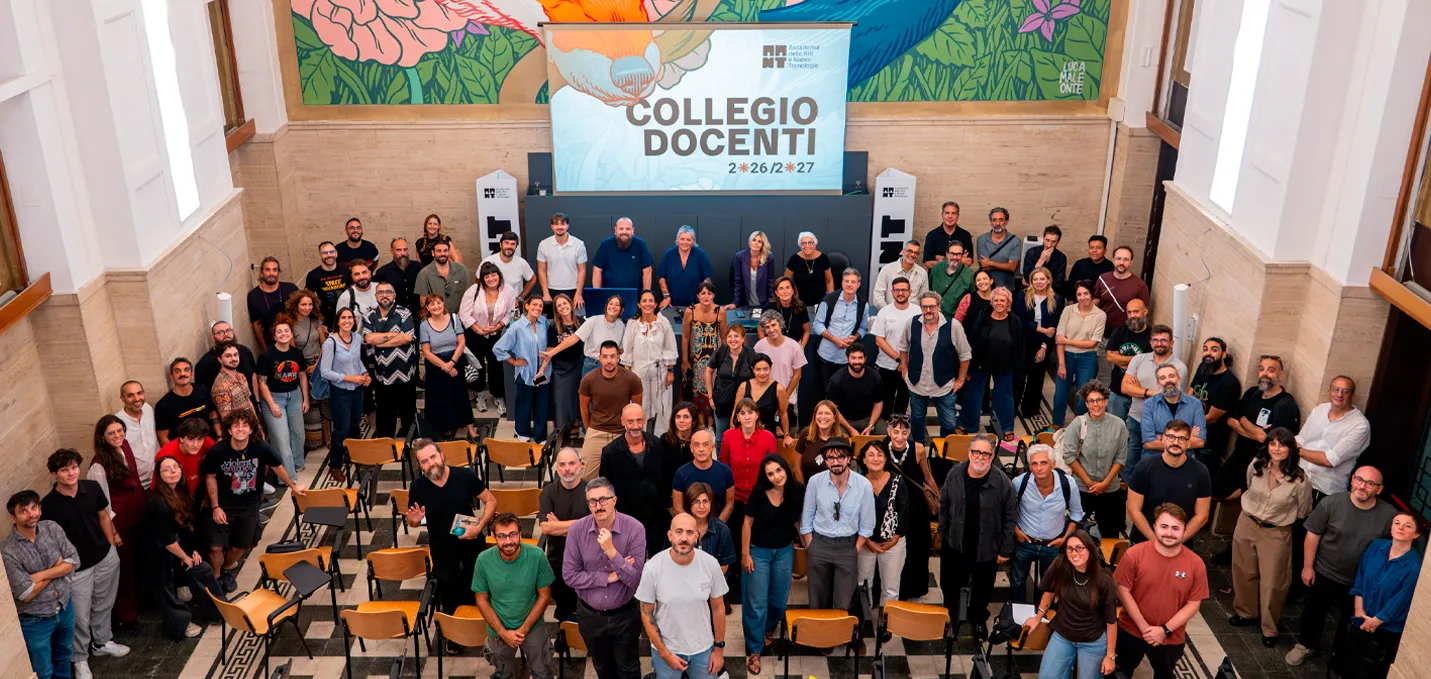
The discussion, moderated by Professor Gianna Angelini, Scientific Director and Head of Internationalization at the Rome Academy, featured contributions from Derrick de Kerckhove and Andrea Colamedici, fostering a dialogue that intertwined theoretical, cultural, and philosophical perspectives. The event provided undergraduate students with valuable interpretative tools to better understand the relationship between creativity, technology, and knowledge.

About the speakers:
Paolo Granata, professor at the University of Toronto, is one of the leading scholars in the field of media studies, aesthetics, and digital culture. His research focuses on the cognitive and perceptual transformations brought about by emerging technologies.

Derrick de Kerckhove, sociologist and media theorist, was one of Marshall McLuhan’s closest collaborators. His work has been instrumental in defining the concept of connective intelligence, analyzing the impact of digital networks on mental and social processes.

Andrea Colamedici, philosopher and publisher, is co-founder of Tlon, a cultural project dedicated to the dissemination of critical thinking and the reinterpretation of philosophy in a contemporary context, with particular attention to ongoing cultural transformations.

“Difesa contro le arti oscure”. Janwei Xun for AANT

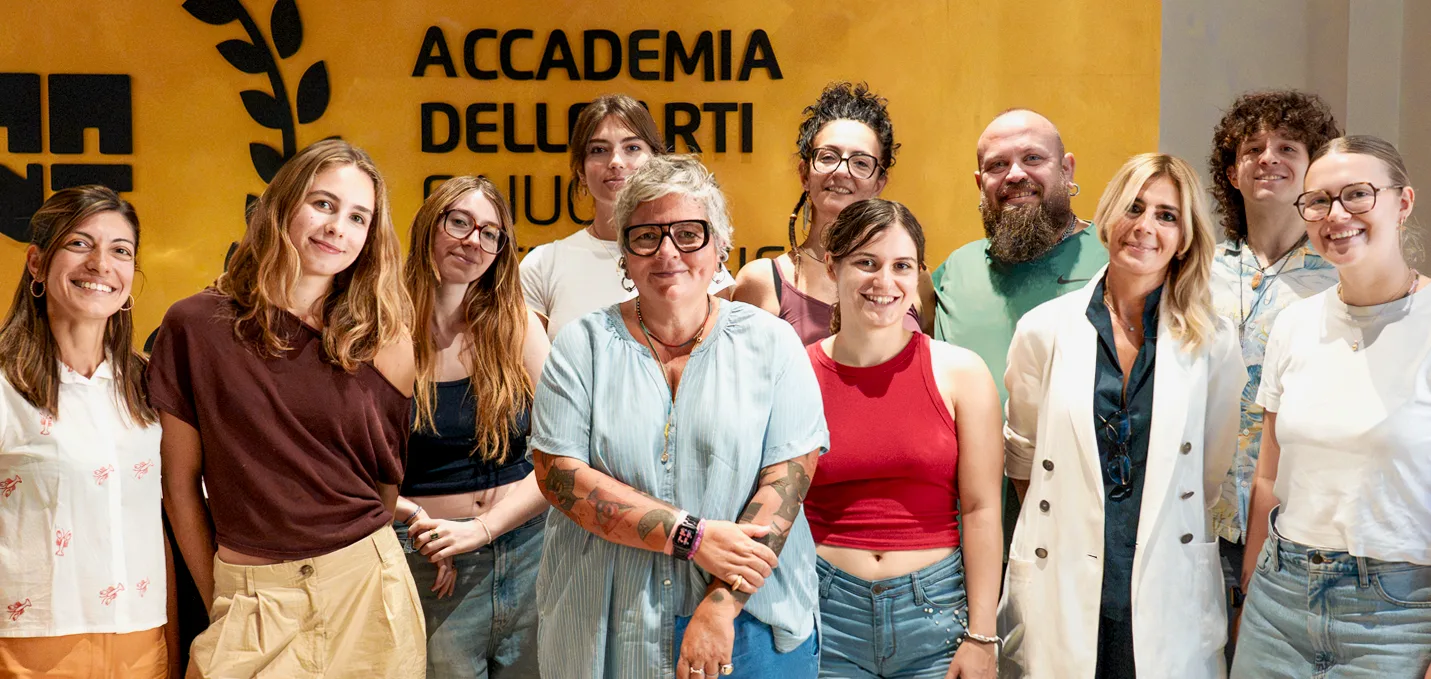
Jianwei Xun,, a collective name for human and artificial intelligences conceived by  Andrea Colamedici,, arrives at AANT and teaches its first course at the Academy. The series of meetings involves 20 students from all three-year academic programs in a cross-disciplinary, immersive educational journey.

The title, “Defense Against the Dark Arts: Thinking Through AI,” ironically echoes the famous Hogwarts subject from the Harry Potter saga and bends it in a philosophical direction: the “dark arts” we must learn to defend ourselves against are not spells, but the mechanisms that steer attention, automatically manufacture consent, and silently replace skills within the everyday infrastructure of our cognitive lives—mechanisms that are all the more effective the less they are recognized.

The course begins from an observation that is as simple as it is radical: generative artificial intelligence has already transformed the way we think, write, work, and perceive reality, and yet the overwhelming majority of people do not have adequate tools to understand what is happening.

The course is structured around seven sessions between March and May 2026, each entrusted to a different voice, according to a principle that is both methodological and philosophical: no single perspective is sufficient to navigate such a vast and constantly changing territory. It begins on March 20 with an introduction by Maura Gancitano and Andrea Colamedici, who situate the course within the theoretical framework of hypnocracy and prompt thinking, the philosophical work developed in recent years precisely through Jianwei Xun.

The following five meetings bring to the center of the discussion an equal number of distinct forms of expertise and sensibility. Giorgiomaria Cornelio, a poet, director, and performer born in Macerata in 1997, is an editor of Nazione Indiana and the author, among other works, of La specie storta and Fossili di rivolta for Edizioni Tlon, as well as L’ufficio delle tenebre. His work moves across poetry, cinema, and performance art, constantly interrogating the relationship between imagination, language, and forms of life, and has been presented at the Venice Biennale, Santarcangelo Festival, and the Science Gallery in Dublin.

Alex Braga, a musician and producer born in Novara, is the creator of A-Mint, the world’s first adaptive musical artificial intelligence, developed with Roma Tre University researchers Francesco Riganti Fulginei and Antonino Laudani: a neural system that learns in real time the improvisational code of the musician it interacts with and performs a duet with them, without any prior training, in a form of human-machine creative collaboration that has brought Braga to the stages of Ars Electronica, Sónar, the Centre Pompidou, and RomaEuropa.

Nicola Zamperini, a professional journalist born in Rome in 1970, is the author of Manuale di disobbedienza digitale and Lavorare (da casa) stanca for Castelvecchi, and curates the Telegram channel Disobbedienze, where every day he presents a news item from the digital world accompanied by a critical interpretive key. His work focuses on the cultural genesis of techno-corporations and on the distortion that algorithms produce in the fundamental dimensions of existence, from friendship to memory, from birth to death.

Francesco Marino, a journalist and digital strategist, is the author of Scelti per te. Come gli algoritmi governano la nostra vita e cosa possiamo fare per difenderci (Castelvecchi, 2021) and Turisti della realtà (Edizioni Tlon), as well as curator of the digital culture project Pillole di futuro presente on Instagram. His perspective investigates the way digital platforms redefine our relationship with reality, transforming every experience into content to be produced, consumed, and monetized.

Luna Bianchi, a legal expert specializing in intellectual property and co-founder of Immanence, a benefit corporation dedicated to assessing the social impacts and ethical risks of algorithms and artificial intelligence systems, is also a member of the World Economic Forum Working Group for Metaverse Governance and, since 2025, of AANT’s GenIALab research laboratory. Her work stands precisely at the point where law, ethics, and AI governance meet, with the aim of building a culture of innovation that is responsible and attentive to fundamental rights.

The series concludes on May 22 with a roundtable discussion that does not aim to draw final conclusions, but rather to show what happens when such different perspectives are brought into dialogue.

For the students involved, these sessions represent a concrete opportunity to develop a new kind of design literacy. The goal is not simply to use AI, but to learn to think through it: to recognize its logics, understand its implications, and integrate it consciously into creative processes. In this scenario, every prompt becomes an act of thought, every output a construction of meaning. This is an increasingly central skill for anyone working in the fields of the arts, communication, and technology.

Silvio Lorusso for OPEN AANT: design, critique and new perspectives

On March 31, AANT – Academy of Arts and New Technologies in Rome hosted a new event in the OPEN AANT series, dedicated to engaging with key figures in the contemporary creative scene. The guest was Silvio Lorusso, writer, artist and designer, who presented his book “The Designer Without Qualities.”

At the core of the talk, moderated by Professor Gianna Angelini, Scientific Director and Head of Internationalization at the Academy, was a highly relevant question: what does it mean to practice design today, in a context where tools are increasingly accessible and the boundaries of the profession are becoming more fluid? Lorusso’s book fits into this scenario as a critical reflection on the role of the contemporary designer, highlighting contradictions, expectations and blind spots within the field.

Through the concept of the “designer without qualities,” the author explores a widespread condition: a less clearly defined design practice, suspended between creative autonomy and market dynamics, between experimentation and precarity. This analysis restores complexity to the designer’s role, emphasizing the need to rethink its identity, tools and responsibilities today. The event provided an opportunity for in-depth discussion and exchange for undergraduate students, offering useful perspectives to navigate the current design landscape.

About the speaker: Silvio Lorusso is a faculty member at Lusófona University in Lisbon and a tutor at the Design Academy Eindhoven, one of Europe’s leading institutions for design education. His work is characterized by a critical and interdisciplinary approach, addressing the transformations of design within the contemporary context.

Design beyond the object: OPEN AANT presents “Design Espanso”

On March 24, AANT opened its doors for a new event in the OPEN AANT series, featuring the presentation of the volume “Design Espanso”, the third chapter in the “Lezioni di Design” editorial cycle.


The meeting, coordinated by Prof. Giovanna Talocci, Leader of  Interior and Product Design program, provided an opportunity to explore design in its most contemporary dimension: not only as the creation of objects, but as a system of relationships that intersects culture, society, images, and ways of living. This approach reflects the transformations of the present and expands the role of the designer as an interpreter and activator of complex scenarios.


The book was conceived as a tribute to Vanni Pasca, a key figure in Italian design culture, and presents a vision of design as an open and interdisciplinary field, capable of fostering dialogue between different disciplines and languages.The volume was presented and the discussion led by the authors Patrizia Scarzella—an architect and journalist long engaged in research, communication, and design dissemination—and Dora Liscia Bemporad, a design historian and critic who has collaborated for years with leading institutions, museums, and academic organizations.


The event provided students enrolled in the three-year academic programs with critical tools to interpret the present and understand the role of design in an increasingly interconnected context.

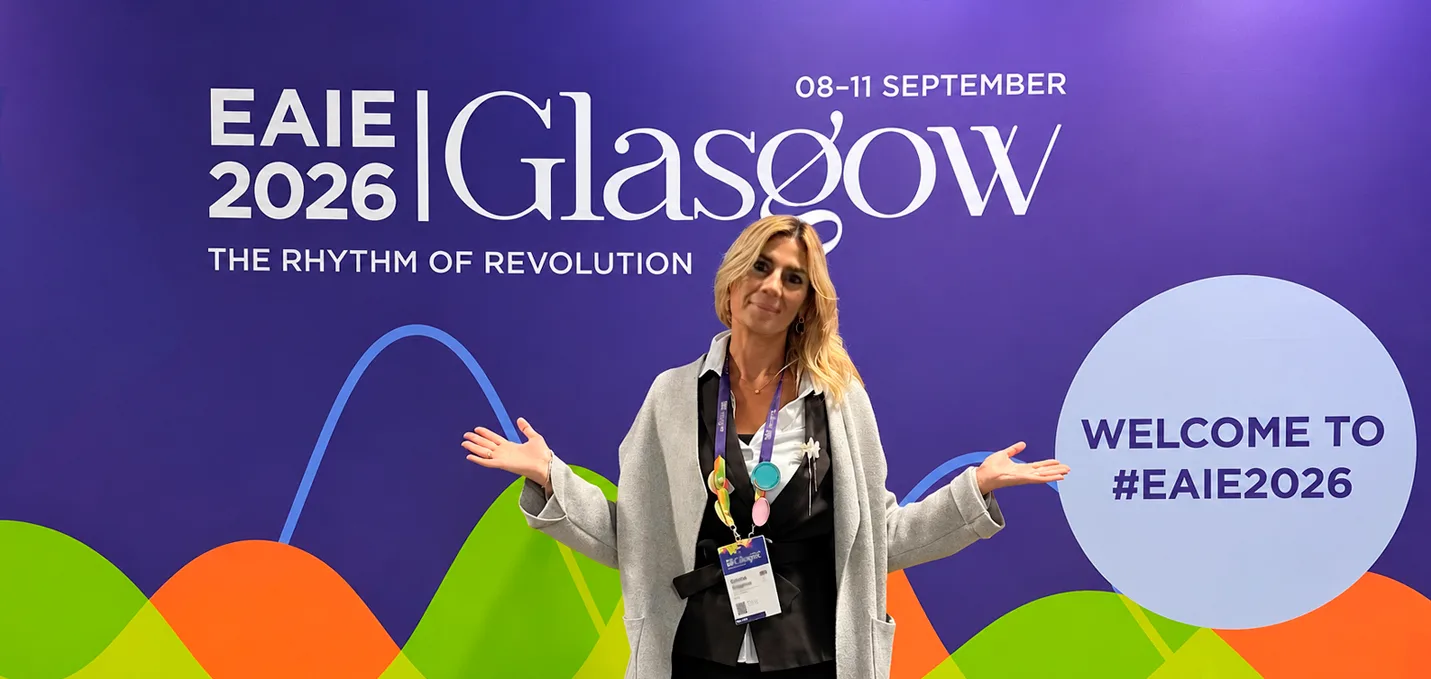
AANT at the ICDChallenge 2026

Following the success of last year’s edition, which saw AANT stand out on an international level with a winning project developed for Porsche, the Rome-based Academy returns to the spotlight at the International Creative Design Challenge (ICDChallenge).


This event represents far more than a competition: it is an immersive experience where design meets reality, testing skills, vision, and the ability to work in international contexts. The ICDChallenge is, in fact, a five-day design sprint in which students from different European universities collaborate to develop innovative solutions for a real client from the creative industry. Guided by international professors and professionals, participants go through all phases of the Design Cycle—from research and ideation to prototyping and testing, culminating in a final presentation to a panel of expert judges.


The 2026 edition, held from March 9 to 13 at the Karel de Grote University of Applied Sciences and Arts (KdG) in Antwerp, saw AANT participate with two teams, each composed of five Design and Graphic Design students and guided by professors Giulia Magaldi and Hila Narducci: Gaia Piersanti, Arianna Basile, Marco Sabino Onofri, Aurora Conte, Victoria Tronciu, Giulia Nobiloni, Aurora Cinti, Irene Palluzzi, Martina Lanotte, Jacopo Parodi.


Other participating universities included: IADE (Portugal), Hanze University of Applied Sciences Groningen (Netherlands), Algebra Bernays University College (Croatia), Hochschule der Medien Stuttgart (Germany), and KdG (Belgium).


Throughout the week, days were structured around workshops, client sessions, and teamwork, while informal moments encouraged cultural and creative exchange among international students. A dynamic environment where designing also means learning to collaborate, adapt, and create impact. Taking part in the ICDChallenge means engaging with the contemporary challenges of design: working under pressure, transforming insights into concrete solutions, and developing projects capable of addressing complex social, cultural, and technological contexts.

AANT at the Franco Film Festival: the Trophy Designed by the Red Team during the 25th Hour

On Friday, March 13, the Institut français Centre Saint-Louis in Rome, Largo Toniolo, hosted the Franco Film Festival awards ceremony, an event dedicated to celebrating contemporary Francophone cinema. Each year, the festival presents a selection of films from a wide range of French-speaking countries, offering audiences the opportunity to explore stories and cinematic perspectives from different continents and cultural backgrounds. Through screenings, discussions and meetings with film professionals, the festival creates a space for dialogue around the diversity and richness of Francophone cinema.

This year’s edition also featured AANT among its key contributors. The trophy awarded to the festival winner was designed and produced by AANT students as part of the 25th Hour, the Academy’s creative workshop format dedicated to experimentation, collaborative design and the development of innovative ideas.

The project was created by the Red Team, winner of the latest edition of the 25th Hour. Composed of students and lecturers from AANT’s three-year programs, the team worked together to design and produce the symbolic object that represents the festival’s award. The initiative perfectly reflects the Academy’s educational approach, where applied creativity, teamwork and engagement with the cultural and audiovisual industries play a central role. Attending the award ceremony marked the final stage of this journey, giving the team the opportunity to see their work become the official symbol of the festival’s artistic recognition.

The AANT team who won the 25th Hour:

Lecturers

  • Simone Mari
  • Antonio Marongiu
  • Riccardo Onorato
  • Matteo Quarta

Students

  • Ali Mohamed Kacem
  • Denise Angrisano
  • Ginevra Assogna
  • Michele Cafaro
  • Claudio Carnevali
  • Beatrice D’Angelo
  • Giuseppe Maria Falso
  • Giorgia Sofia Fede
  • Chiara Giuliani
  • Alessandro Lavarone
  • Giulia Likar
  • Sofia Lucciola
  • Sabrina Lupasco
  • Giosue Molinaro
  • Gioia Pagliano
  • Aurora Pandolfo
  • Arianna Pepa
  • Nicolò Pontarelli
  • Gianluca Sammarco
  • Fabrizio Alexander Saune Caycho
  • Irene Stefanoni

AANT Graduation Sessions March
13 and 14

On March 13 and 14, AANT hosted two new graduation sessions, marking the final step in the students’ academic journey and providing an opportunity to present and discuss the projects developed throughout their years of study. The theses presented reflect the diversity of languages and design fields that characterize AANT’s three-year educational program: from architectural redevelopment to visual storytelling, from social communication to motion design, as well as editorial experimentation and research in contemporary design. Through their final projects, students explore themes related to visual culture, spatial design, communication and new technologies, developing works that combine theoretical research with practical design application.

Below are the names of the graduates and the titles of their theses:

  • Simone Nocera: “Riqualificazione della facciata di un edificio situato nel quartiere di Vigne Nuove”
  • Lorenzo Lascialandare: “Oltre la musica: il modello Travis Scott come strategia di branding transmediale”
  • Barbara Panetta: “VIRTUOSI. Storie di meraviglie”
  • Meliscia Staniscia: “TRACCE: geometrie in movimento”
  • Gabriele Formiconi: “Illusione chimica: progettazione di una campagna di comunicazione sociale”
  • Valeria Calore: “Come applicare un ottimo storytelling alla costruzione di un citybranding”
  • Leonardo Altarocca: “ROMA VERA. Atlante visivo delle texture urbane”
  • Matteo Donati: “Muri liberi: arte temporanea in spazi permanenti”
  • Lucrezia Sebastiani: “Rest in Paint: il nuovo sistema di tutela della memoria urbana”
  • Megi Koshanin: “Il Circo del Basket”
  • Marco Tripiano: “Storytelling & 3D in sinergia. Interazione tra storytelling e comunicazione visiva tridimensionale in ADV”
  • Eleonora Fumelli: “HandLessLy: un sistema meccanico di apertura a pedale per servizi igienici ad alta frequentazione”
  • Celeste Fraulin: “Progetto di riqualificazione dell’ex colonia marina “Principi di Piemonte”, Santa Severa”
  • Federico D’Orazio: “Sbotto, uno spazio digitale in cui lo sfogo personale incontra l’ascolto condiviso”
  • Abirami Raj: “Oltre gli stereotipi. Una miniserie sulla diaspora indiana e la costruzione dell’identità”
  • Giulia Beccarisi: “La casa delle giuste distanze. Progetto di interior design per l’abitare intergenerazionale”
  • Alice Comotto: “Villa Alda. Progetto di riqualificazione di una villa liberty, da residenza privata a struttura ricettiva”
  • Adriano Longoni: “Eschaton. Distopia e la fine dell’uomo”
  • Leonardo Battisti: “Progetto di riqualificazione di una Casa Cantoniera a Pré-Saint-Didier”
  • Gioia Pagliano: “Luce sui sentimenti: raccontare le emozioni attraverso il libro pop-up”
  • Carlotta Pucci: “Essenziale, con il corpo e con il gesto”
  • Daniel Alejandro Quintero: “The Evolution of Motion Graphics Inspired by the Art of Saul Bass”
  • Alberta Crimaldi: “KESS Berlin e il vanity table: origini, evoluzione e casi studio nel beauty”
  • Giada Concetti: “Sfoglia: il digitale come estensione dell’esperienza reale dei mercati rionali”
  • Giulia Gangemi: “Allestimento e luce come dispositivo narrativo: progetto per i Bronzi di Riace e le Teste di Porticello al MArRC”
  • Alice Frittella: “Hotel de la Sibille: progetto di riqualificazione di una locanda storica”
  • Giuseppe Loverre: “U’ Munacidde: dalla tradizione orale alla rappresentazione dell’invisibile”


Good luck, everyone!

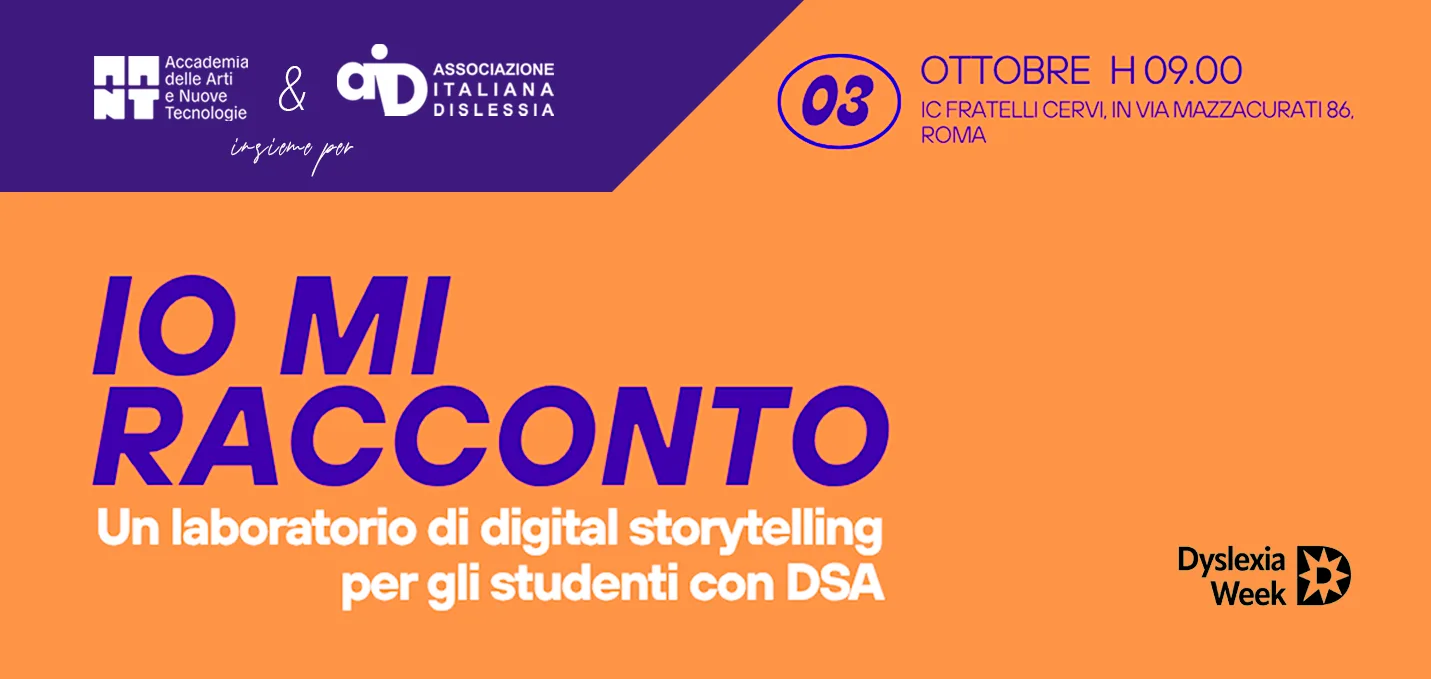
AANT and AID. Teacher Training on SpLD and Neurodiversity

For the third consecutive year, AANT has renewed its agreement with AID – the Italian Dyslexia Association – further consolidating a structured faculty training programme focused on neurodiversity and Specific Learning Disorders (SLD). This commitment is part of the broader project “Democracy of Learning – The University for Inclusion”, aimed at promoting increasingly aware, accessible teaching practices aligned with the principles of educational equity.


Founded in 1997, AID is Italy’s leading organization dedicated to promoting the rights and opportunities of individuals with Specific Learning Disorders. Through training, research and scientific consultancy, the Association supports schools, universities and institutions in building inclusive learning environments that are aligned with current legislation. The training programme designed for AANT faculty members is reviewed by AID’s Scientific Committee and developed with contributions from university trainers, expert tutors supporting higher education students, metacognition specialists and experts in compensatory tools. This three-year collaboration reflects the Academy’s ongoing commitment to investing in pedagogical quality and teaching innovation.


The programme for the current academic year is structured into three levels:

  • Basic training for new teachers, with dedicated video lessons.
  • In-person training.
  • “IncludiAMO” update and peer-exchange help desks. The “IncludiAMO?” space was created as a structured setting for continuous professional development, consultancy, and sharing, with the aim of exploring laws and regulations in greater depth, strengthening the design of Individualised Plans, supporting the development of accessible exam assessments, and fostering institutional coherence between the SpLD Service and teaching staff. This model combines academic rigour with attention to cognitive differences, promoting an inclusive and collaborative culture of assessment.


This model integrates academic rigour with attention to cognitive diversity, promoting an inclusive and collaborative assessment culture. Within the fields of visual, digital and technological arts, inclusion is not only an ethical value but a structural element of educational quality. Understanding neurodiversity means recognising a plurality of cognitive styles, different learning approaches and unique expressive potential.

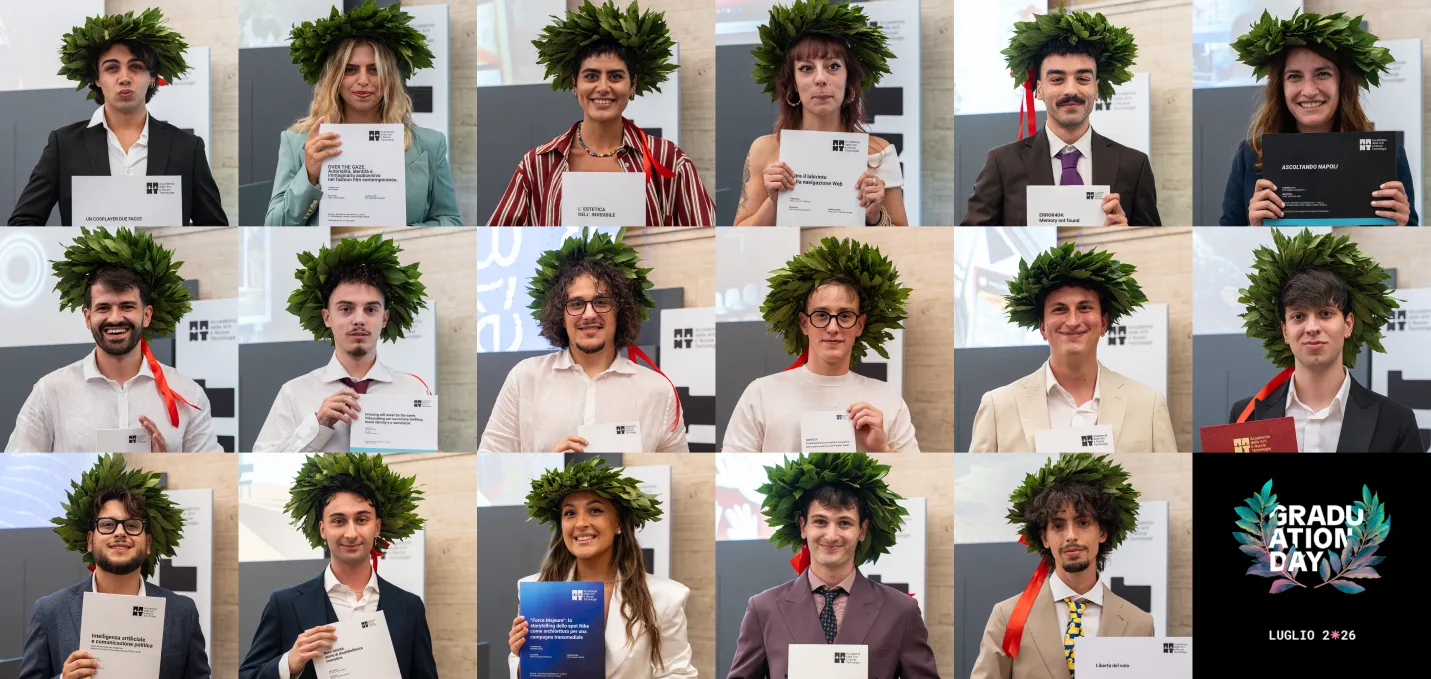
AANT Graduation Sessions: Designing the Present, Imagining the Future

On February 27 and 28, AANT hosted the latest Bachelor’s Degree Graduation Sessions, two days dedicated to research, experimentation, and contemporary design project development. The theses presented explored a wide range of languages and disciplines, from film directing to interior design, from art direction to graphic design, from photography to urban planning, offering a contemporary and conscious perspective on the cultural, social, and technological transformations of our time.

Below are the names of the graduates and the titles of their final projects:

Elena Fierro — “MERCATO + Spazio di scambio, luogo di comunità”

Juan Carlos Cortopassi — “La regia attraverso il piano sequenza”

Lorenzo Paul Di Pastena — “Casa Mea”

Adriano Rosati — “Sul Fotoreportage”

Giulia Caiola — “Il colore della voce: l’arte murale a Roma dagli anni 2000 ad oggi”

Chiara Casolini — “La grammatica dell’abitare: il cinema come enciclopedia dello spazio domestico”

Sofia Fiore — “The Animated Uncanny: Horror Cinema as a Language of Contemporary Fears”

Alice Barbato — “Dal progetto allo schermo: ricerca teorica sulla pellicola nel cinema contemporaneo e realizzazione di un cortometraggio”

Jamila Orel — “La seconda vita delle storie. Il viaggio dell’adattamento cinematografico”

Gabriele Mottola — “IUMI: anatomia di una visione”

Sara Massucci — “Che cos’è la bellezza? Un’indagine tra pregiudizio ed emozioni nell’era dell’intelligenza artificiale”

Romina Emanuela Moisei — “Dolore Creativo. Il dolore come strumento creativo e comunicativo nell’art direction contemporanea”

Sofia Teresa Bucarelli — “Sottopasso. Un nuovo ecosistema digitale per l’accesso alla scena musicale emergente”

Luna Nicaise — “Swaply. Swap Skills. Meet People.”

Chiara Vessicchio — “Latrinalia: lo scarico sociale”

Francesca Ferrara — “Roovi: la tua guida agile nella giungla urbana”

Francesco Nava Mambretti — “BAND Identity: storydoing digitale e branding per una release musicale”

Luca Piccirilli — “Co-omprendi: progettazione di una piattaforma a supporto della diagnosi precoce dei DSA”

Ramona Munteanu — “LUMEA. Un mondo che si illumina di connessioni”

Alessandro Bietolini — “Controller MIDI modulare con cursori riposizionabili magnetici”

Martina Sirleto — “Progetto di riqualificazione a Favignana, tra memoria storica e identità del luogo”

Giuseppe Nicola Donadio — “Compatta”

Luca Rieder — “Apollo 98: il vuoto come misura dello spazio”

Simone Carnevali — “Modulovivo – Un sistema che restituisce spazio, tempo e cura alla vita vegetale”

Arianna Sordi — “Check Point: micro-architetture urbane per la sosta e il benessere dei rider delivery”

Annalisa De Iulis — “La Casa del Doganiere: progetto di riqualificazione e riuso di un sito dall’elevato patrimonio paesaggistico in Sicilia”

Giulia Di Giannantonio — “Abitare la memoria: progetto di riuso tra spazio, identità e ospitalità”

Sara Agellion — “Tra interno e quotidiano: ristrutturazione di una casa residenziale nelle Filippine”

Gaia Pugliese — “SOGLIA. Sistema di Riposo per le Emergenze”

Gianluca Panichi — “Elisir: progettazione di una lampada cromoterapeutica per il benessere sensoriale. Design e luce per l’equilibrio psicofisico”

Michela Iachetta — “Incastri Perfetti: quando il retail diventa relazione”