
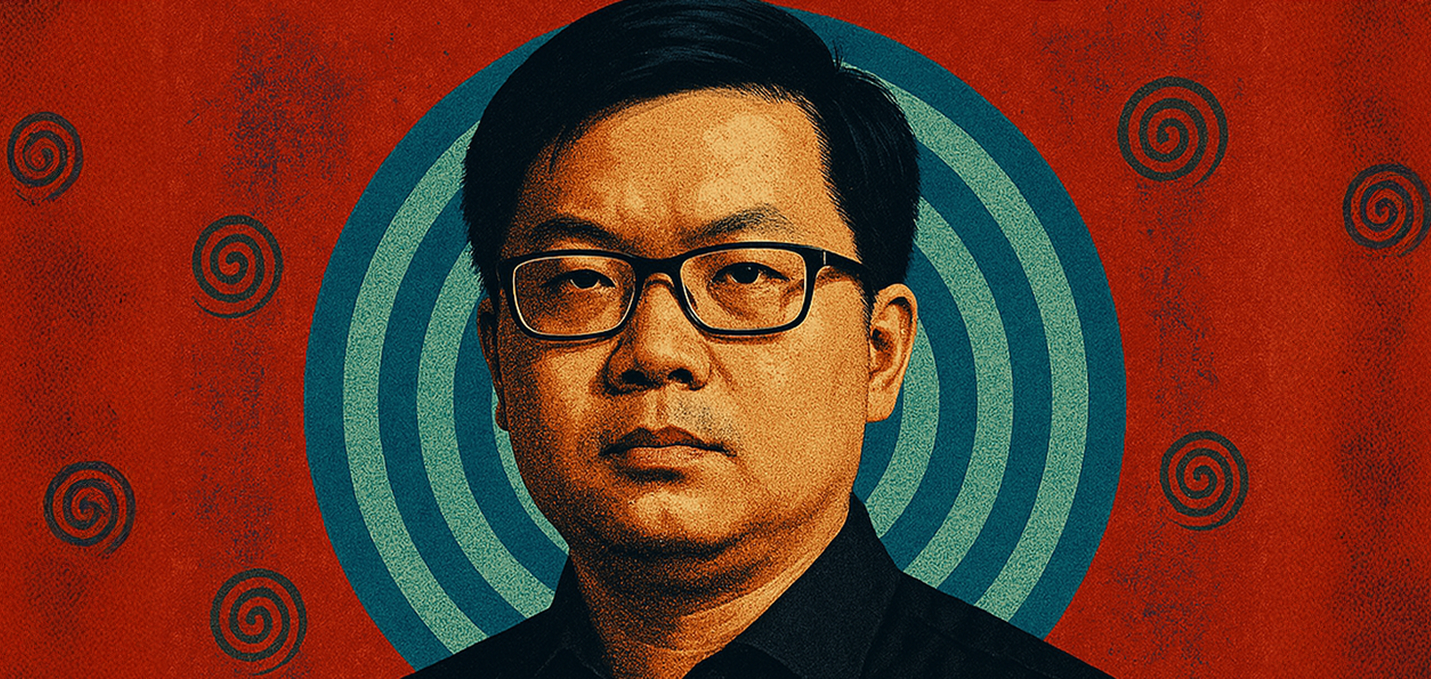
Jianwei Xun,, a collective name for human and artificial intelligences conceived by Andrea Colamedici,, arrives at AANT and teaches its first course at the Academy. The series of meetings involves 20 students from all three-year academic programs in a cross-disciplinary, immersive educational journey.
The title, “Defense Against the Dark Arts: Thinking Through AI,” ironically echoes the famous Hogwarts subject from the Harry Potter saga and bends it in a philosophical direction: the “dark arts” we must learn to defend ourselves against are not spells, but the mechanisms that steer attention, automatically manufacture consent, and silently replace skills within the everyday infrastructure of our cognitive lives—mechanisms that are all the more effective the less they are recognized.
The course begins from an observation that is as simple as it is radical: generative artificial intelligence has already transformed the way we think, write, work, and perceive reality, and yet the overwhelming majority of people do not have adequate tools to understand what is happening.
The course is structured around seven sessions between March and May 2026, each entrusted to a different voice, according to a principle that is both methodological and philosophical: no single perspective is sufficient to navigate such a vast and constantly changing territory. It begins on March 20 with an introduction by Maura Gancitano and Andrea Colamedici, who situate the course within the theoretical framework of hypnocracy and prompt thinking, the philosophical work developed in recent years precisely through Jianwei Xun.
The following five meetings bring to the center of the discussion an equal number of distinct forms of expertise and sensibility. Giorgiomaria Cornelio, a poet, director, and performer born in Macerata in 1997, is an editor of Nazione Indiana and the author, among other works, of La specie storta and Fossili di rivolta for Edizioni Tlon, as well as L’ufficio delle tenebre. His work moves across poetry, cinema, and performance art, constantly interrogating the relationship between imagination, language, and forms of life, and has been presented at the Venice Biennale, Santarcangelo Festival, and the Science Gallery in Dublin.
Alex Braga, a musician and producer born in Novara, is the creator of A-Mint, the world’s first adaptive musical artificial intelligence, developed with Roma Tre University researchers Francesco Riganti Fulginei and Antonino Laudani: a neural system that learns in real time the improvisational code of the musician it interacts with and performs a duet with them, without any prior training, in a form of human-machine creative collaboration that has brought Braga to the stages of Ars Electronica, Sónar, the Centre Pompidou, and RomaEuropa.
Nicola Zamperini, a professional journalist born in Rome in 1970, is the author of Manuale di disobbedienza digitale and Lavorare (da casa) stanca for Castelvecchi, and curates the Telegram channel Disobbedienze, where every day he presents a news item from the digital world accompanied by a critical interpretive key. His work focuses on the cultural genesis of techno-corporations and on the distortion that algorithms produce in the fundamental dimensions of existence, from friendship to memory, from birth to death.
Francesco Marino, a journalist and digital strategist, is the author of Scelti per te. Come gli algoritmi governano la nostra vita e cosa possiamo fare per difenderci (Castelvecchi, 2021) and Turisti della realtà (Edizioni Tlon), as well as curator of the digital culture project Pillole di futuro presente on Instagram. His perspective investigates the way digital platforms redefine our relationship with reality, transforming every experience into content to be produced, consumed, and monetized.
Luna Bianchi, a legal expert specializing in intellectual property and co-founder of Immanence, a benefit corporation dedicated to assessing the social impacts and ethical risks of algorithms and artificial intelligence systems, is also a member of the World Economic Forum Working Group for Metaverse Governance and, since 2025, of AANT’s GenIALab research laboratory. Her work stands precisely at the point where law, ethics, and AI governance meet, with the aim of building a culture of innovation that is responsible and attentive to fundamental rights.
The series concludes on May 22 with a roundtable discussion that does not aim to draw final conclusions, but rather to show what happens when such different perspectives are brought into dialogue.
For the students involved, these sessions represent a concrete opportunity to develop a new kind of design literacy. The goal is not simply to use AI, but to learn to think through it: to recognize its logics, understand its implications, and integrate it consciously into creative processes. In this scenario, every prompt becomes an act of thought, every output a construction of meaning. This is an increasingly central skill for anyone working in the fields of the arts, communication, and technology.