AANT Rome Bachelor’s Degree Theses: October 17, 2026 Session

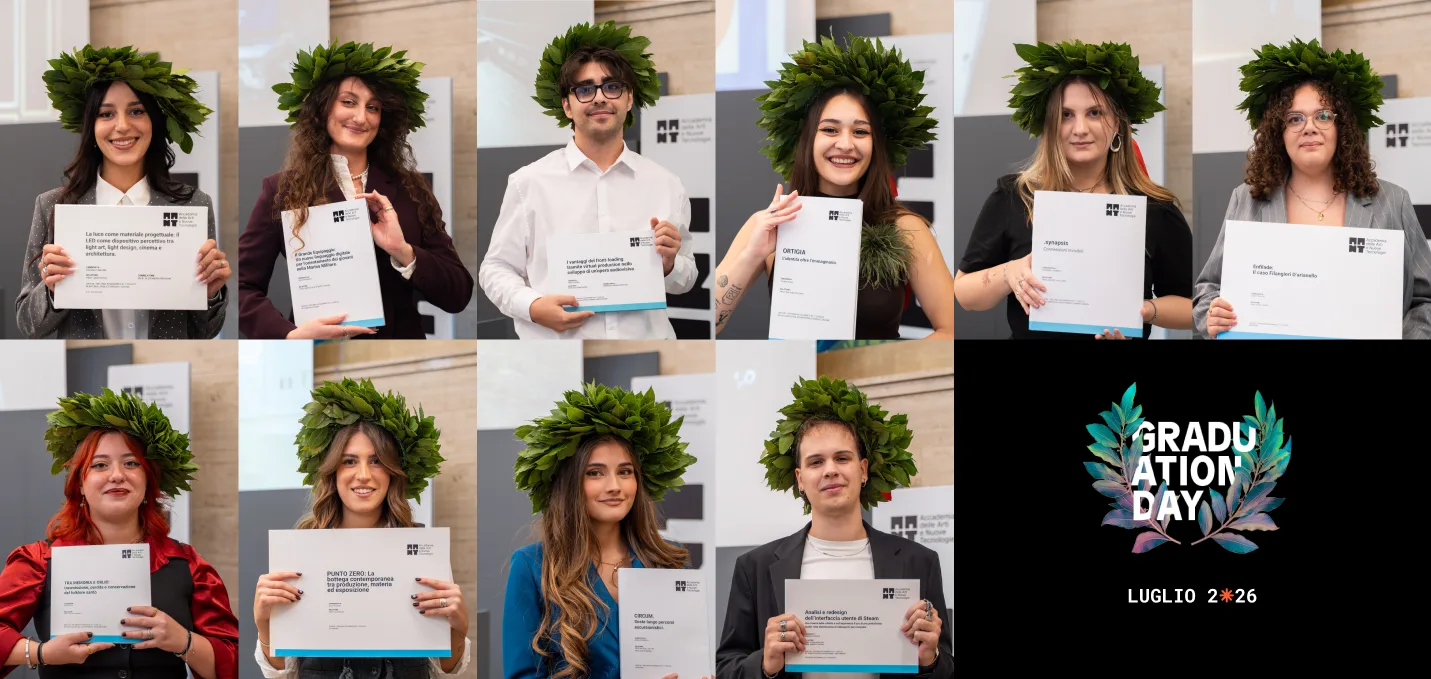
On Saturday, October 17, AANT hosted the autumn Bachelor’s degree thesis defense session for the 2025/2026 academic year. The day was dedicated to creativity, research, and experimentation, featuring ten students from the Interior Design, Advertising, and Videomaking programs. The theses offered a wide range of creative and design perspectives, highlighting the dialogue between research, experimentation, and innovation. Together, these projects showcased the students’ ability to explore contemporary themes through different languages, methodologies, and individual approaches.

Here are the names of the graduates and the titles of their projects:

  1. Eugenia Carlino: “La luce come materiale progettuale: il LED come dispositivo percettivo tra light art, light design, cinema e architettura”;
  2. Giulia Romano: “Il grande Equipaggio: Un nuovo linguaggio digitale per l’orientamento dei giovani nella Marina Militare”;
  3. Nicola Pasqui: “I vantaggi del front-loading tramite virtual production nello sviluppo di un’opera audiovisiva”; 
  4. Tiziana Diana Advertising: “Ortigia: l’identità oltre l’immaginario”;
  5. Caterina Lamberti: ”Synapsis – Connessioni invisibili”;
  6. Sofia Troccoli: “Enfilade: il caso Filangeri D’Arianello”;
  7. Melania Usai: “Tra memoria e oblio: trasmissione, perdita e conservazione del folklore sardo”;
  8. Diletta Romei: “Punto Zero: la bottega contemporanea tra produzione, materia ed esposizione”;
  9. Elisa Cretarolo: “CIRCUM. Soste lungo percorsi escursionistici”;
  10. Andrea Cosenza: “Analisi e Redesign dell’interfaccia utente di Steam”. 


The Academy congratulates all its graduates and wishes them every success as they embark on their next professional challenges with curiosity, awareness, and a creative spirit.
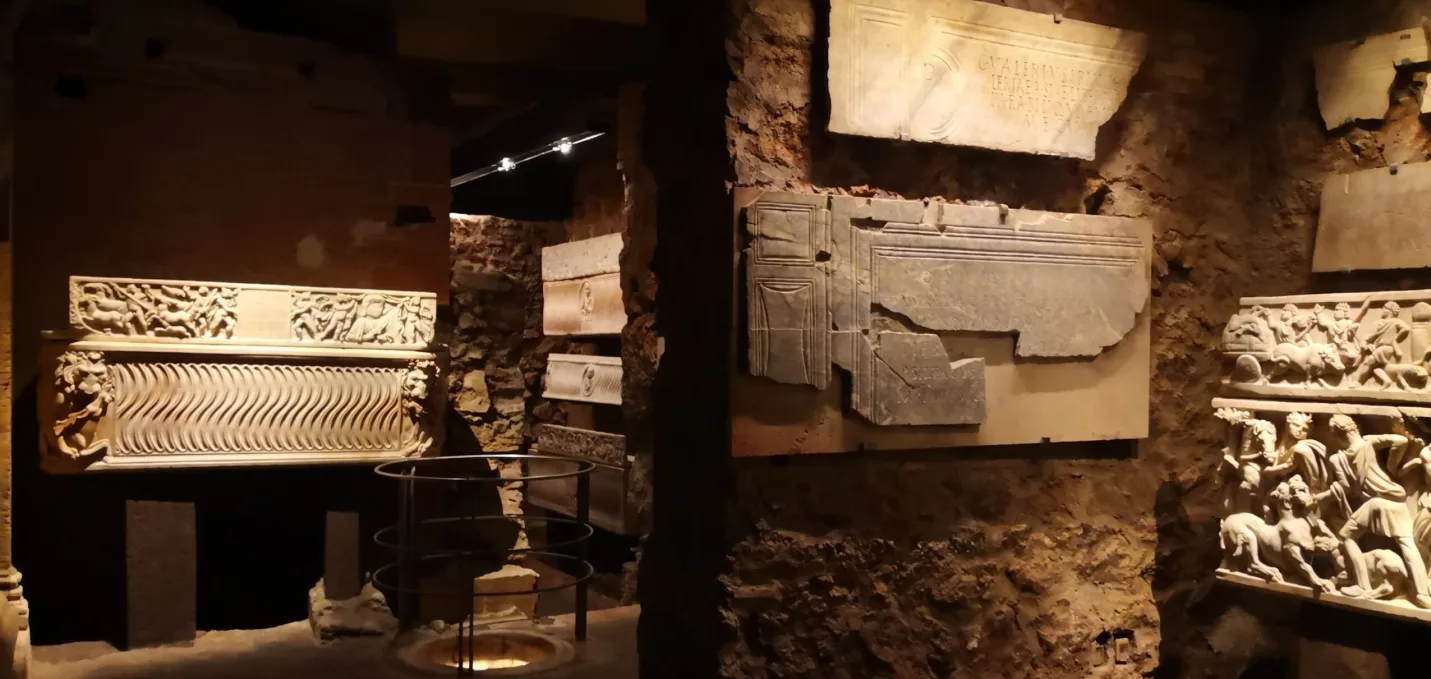
New lighting for the Vatican Necropolis, designed by the Director of LUDE

ATMOSFERE magazine recently published an interview with architect Alessandra Reggiani, lecturer on the Interior Design programme and Director of the LuDe–Lighting Design Master’s programme at AANT, about the new lighting for the Vatican Necropolis, which she designed in collaboration with Osram/Zumtobel.

In this important project, made even more complex by the challenging microclimatic conditions and the delicate nature of the setting, light was conceived from the very outset as the cornerstone of the new installation: a guiding element that accompanies visitors as they immerse themselves in history, on an evocative and emotionally rich journey of knowledge and faith.

Beyond its technical and functional qualities, light clearly demonstrates its powerful cultural and communicative potential, through a subtle interplay between sophisticated technology tailored to individual requirements and visitors’ visual and perceptual capacities, allowing them to enjoy, through light, a unique experience in a setting of extraordinary beauty and spirituality.

A specialist in cultural heritage lighting, Alessandra Reggiani brings an approach to teaching at AANT that combines technical rigour, design sensitivity and attention to people’s experience. Through her teaching and her role as Director of the LuDe–Lighting Design Master’s programme, she helps train designers who understand the cultural value of light, strengthening the connection between academic education and professional practice.

Find out more
https://www.atmosferamag.it/it/necropoli-vaticana-osram-zumtobel-illuminazione/

Master LuDe AANT: Light Takes Shape in a Workshop with DGA

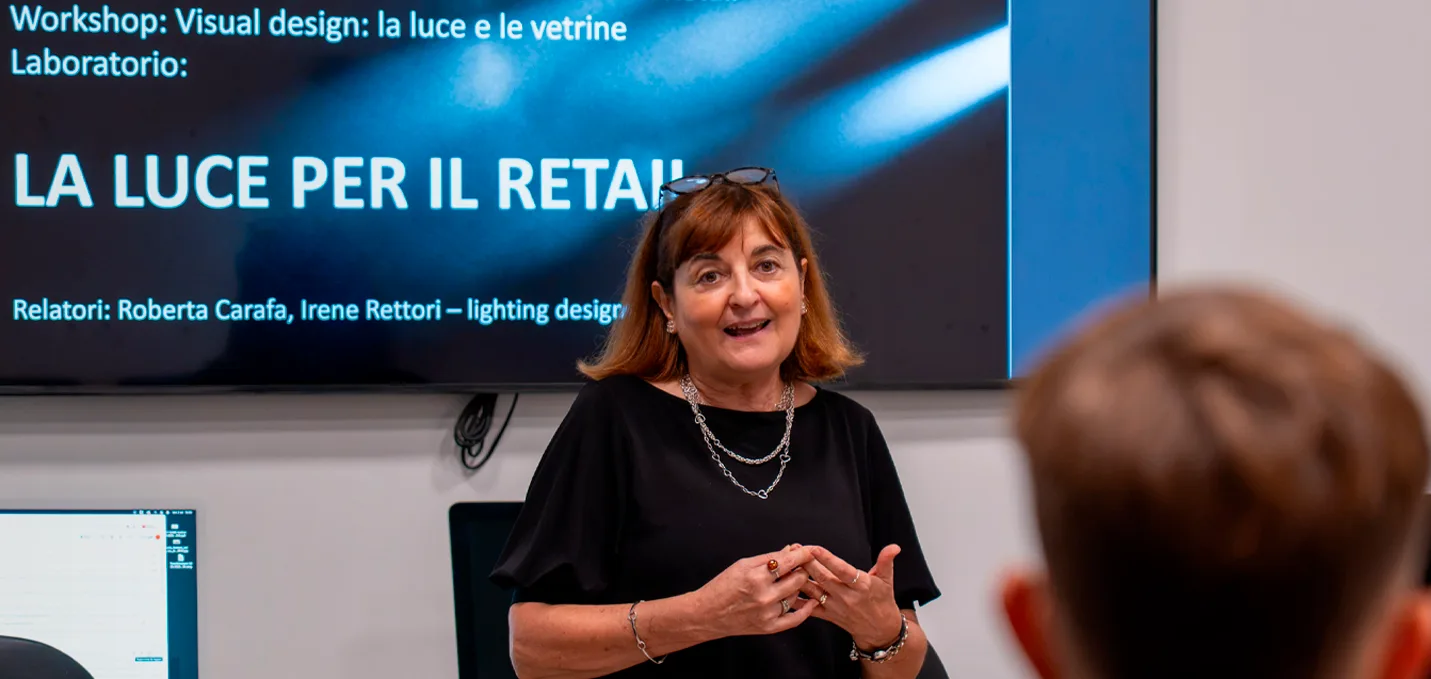
Light takes center stage in a hands-on experience of experimentation and design at AANT’s Master LuDe – Lighting Design. On Friday, October 2, students took part in a workshop in collaboration with DGA, a Florence-based company specializing in the production of miniature lighting fixtures, exploring firsthand the expressive potential of light and its ability to transform spaces, surfaces, and objects.

The activity was part of the Master’s third module, dedicated to Retail Design, within the workshop Visual Design – Lighting Window Displays, led by Professor Alessandra Reggiani, Director of the Master’s program.

An opportunity to move from theory to practice and directly experience the expressive power of light. Guided by two architects from DGA, students explored how different lighting solutions can transform the perception of surfaces and objects, create atmospheres, and highlight details, discovering the essential role of light in shaping visual experiences.

Experimenting, observing, interpreting: the workshop focused on the interplay between creative intuition and technical expertise, two essential skills for lighting designers. Through direct interaction with DGA professionals, students gained a deeper understanding of the relationship between design quality, lighting tools, and visual outcomes. After all, lighting design is not simply about illuminating a space, but about giving it character, shaping perceptions, and turning ideas into emotions through precise and thoughtful design choices.

Designing the Invisible: AANT at the DxS Conference 2026

How do we design something we cannot see? And how can design give form, meaning and experience to what lies beyond visual perception? These questions are at the heart of the two contributions through which AANT will take part in the DxS Conference 2026, scheduled for 15–16 October in Rome at AMKA Social Hub.

Now in its third edition, the Conference is promoted by the DxS: Design (per) Semiotics study group, which explores the dialogue between design and semiotics through the themes of perception, action and meaning-making. The 2026 edition focuses on the theme The Credible and the Incredible: Architectures of Imagination.

Representing AANT will be Alessandra Reggiani, architect, lighting designer, AANT lecturer and Director of the LuDe – Lighting Design Master’s Programme, and Michelle Damilano, a second-year Design student.

With her presentation “Illuminating the Invisible”, Alessandra Reggiani will explore light as a design medium capable of shaping experience, communication and our relationship with space. Her focus will be on underground environments, where technical, practical, perceptual and sensory aspects intersect in unusual conditions. Here, the immaterial nature of light meets the “invisibility” of space, calling for specific design approaches and a different perspective on the relationship between lighting and perception.

Michelle Damilano approaches the theme from a different perspective with her contribution, “Describing the Invisible: Colour Beyond Sight.” The project emerged during her academic studies from an apparently simple question: how can we describe a colour without referring to visual elements or objects commonly associated with it? This question gave rise to a research project exploring how the experience of colour can be made accessible to blind and visually impaired people through multisensory and narrative tools. Colour is thus taken beyond its exclusively visual dimension and interpreted through textures, temperatures, sounds, emotions and sensory associations.

Two contributions that, from different perspectives and levels of experience, share the same field of inquiry: exploring what design can make perceptible, accessible and meaningful. Because designing also means questioning what we take for granted and finding new languages to make visible and shareable what is not yet so.

AANT Students’ Documentaries at Pigneto Film Festival 2026

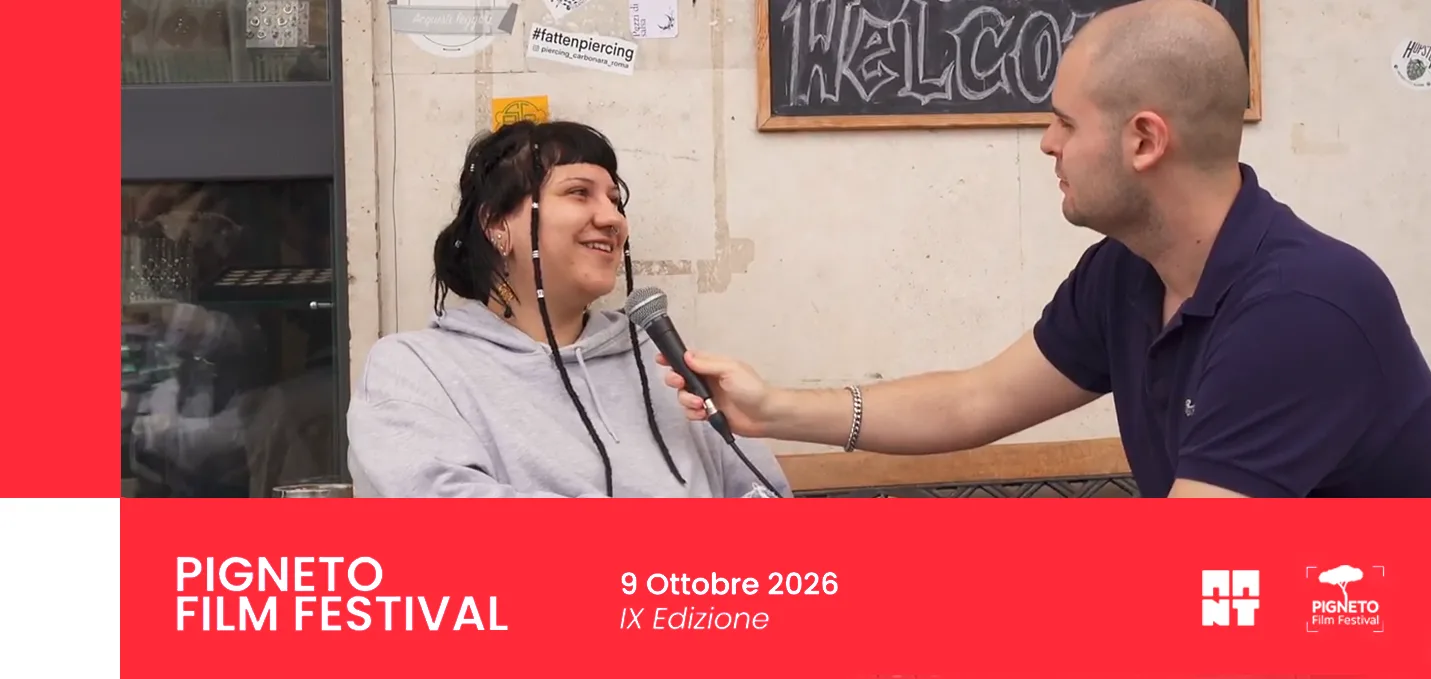
On Friday, October 9, starting at 6:00 p.m., Prima di domani and Quanto basta, two documentaries created by first-year students of AANT’s three-year academic programme in Videomaking, Story, Cinema and Media Design, will be screened at Cantina Rosé as part of the Pigneto Film Festival.


The event is part of the programme of activities taking place across the neighbourhood during the Festival, bringing cinema into a variety of spaces and creating opportunities for filmmakers, audiences and the local community to come together.


Developed as part of the educational activities offered by the Academy in Rome, the two projects share a common area of exploration: observing the present through the voices, expectations and fears of people from different generations and social backgrounds. Prima di domani builds a collective narrative around the pursuit of happiness, exploring the relationship between individual desires, expectations and social pressures. Quanto basta, on the other hand, begins with a direct question — “What are we afraid of when we think about the future?” — and, through interviews and personal accounts, brings different experiences into dialogue, revealing shared fears and questions that transcend individual differences.


Guided by AANT faculty members, the students approached documentary filmmaking as a practice rooted in observation, listening and engagement with reality.

geniaLAB’s First Annual Forum at AANT

How can we nurture the desire to create in the age of AI? This question is at the heart of “New Forms of Creative Knowledge”, geniaLAB’s first annual Forum, taking place on 23 and 24 October 2026 at AANT’s campus at Via Monza 21, Rome.

The two-day event will bring together art, philosophy, research and education to explore the relationship between artificial intelligence and creative processes. It builds on the work of geniaLAB, AANT’s interdisciplinary research HUB dedicated to generative AI, digital culture, cognitive technologies and creative innovation.

On Friday 23 October, the programme will open with a welcome address by Rossana Quarta, Director of AANT, followed by “A Year of geniaLAB”, presented by Gianna Angelini, AANT’s Scientific Director and geniaLAB Coordinator. Andrea Colamedici, Chair of geniaLAB’s Scientific Committee, will then deliver a talk entitled “AI: Apocalyptic Intelligence. Navigating Alarmism and Marketing”.

The day’s three sessions will address the question “How can we nurture the desire to create in the age of AI?” Each speaker will have fifteen minutes to offer a response drawing on their own perspective and experience. Contributors will include Massimo Canevacci, Maura Gancitano, Sabina Minardi, Paolo Granata, Pier Luigi Capucci, Simone Arcagni, Marco Gori, Emanuele Frontoni, Luna Bianchi, Alex Braga and Derrick de Kerckhove. Each session will be followed by a discussion, moderated respectively by Andrea Colamedici, Maura Gancitano and Gianna Angelini.

The final part of the afternoon will feature a closing lecture and discussion with Fr Andrea Ciucci, Secretary General of the Vatican RenAIssance Foundation. The day will conclude with a presentation of the outcomes of “AI&ME: The Fine Line Between Creativity and Generativity”, a workshop led by Alex Braga with AANT students, bringing theoretical reflection into dialogue with creative experimentation.

On Saturday 24 October, the Forum will continue in the Giardino d’inverno, focusing on the question “How can we inspire and develop the desire to create in the age of AI?” Following the opening remarks by Gianna Angelini, speakers will include Rossana Quarta for AANT; Riccardo Balbo, Academic Director of the IED Group; Anthony Marasco, Chair of NABA’s AI Committee; and Giovanna Cassese, a member of ANVUR’s Governing Board, Italy’s National Agency for the Evaluation of Universities and Research Institutes.

The morning, intended for interested faculty members, will continue with an open discussion between the academies and members of AANT’s and geniaLAB’s Scientific Committee, moderated by Gianna Angelini and Andrea Colamedici. Building on themes emerging from the previous day, the discussion will explore the role of education and artistic and design research, including how research is evaluated in the age of AI.

The aim is to build a common approach to the challenges facing institutions of higher arts education and lay the foundations for a lasting dialogue, supporting ongoing reflection on changes in creative processes, teaching and research.

Download the full programme (PDF)

Read more >

AANT at Creative Skills Week 2026

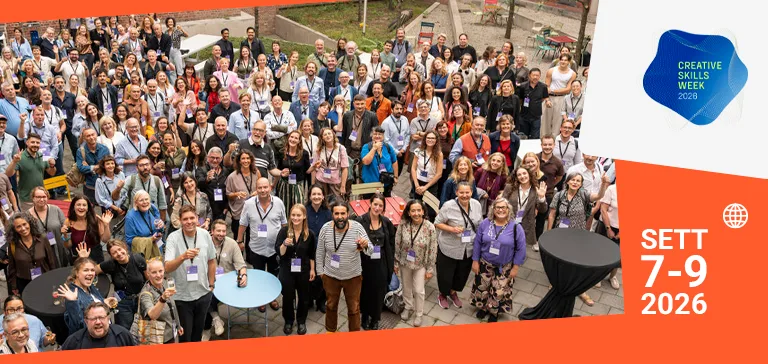
From 7 to 9 September, Brussels hosted the fourth and final edition of Creative Skills Week, an event dedicated to the future of creative skills in Europe and part of CYANOTYPES, a project funded by the European Union.

The event, attended by AANT lecturer Enrico Di Munno, took place at LUCA School of Arts and ICHEC Brussels Management School. It brought together public and private educational institutions from several European countries, providing an opportunity to reflect on the work carried out over the past four years and discuss the transformations currently reshaping education and the creative industries.

Three days of meetings, workshops and working sessions focused on Creative Skills, exploring their role within schools and training institutions against a backdrop of profound digital, technological and geopolitical change.

The first day, dedicated to “Why Creative Skills Matter”, opened the discussion on the value of creative skills through the CYANOTYPES Creative Agency Clinic. The session showcased a wide range of pilot projects developed by the institutions involved in the programme, including the experience of AANT and Genialab. The discussion highlighted how creativity, the ability to connect different disciplines, experimentation and adaptability are playing an increasingly important role in the development of new educational models.

The second day focused on “Making Creative Skills Systemic”, with workshops and opportunities for direct exchange between institutions around their respective pilot projects. The thematic working sessions brought to light strategies, challenges and perspectives related to the application of the CYANOTYPES framework as a tool for designing and evaluating educational programmes aimed at developing Creative Skills. In this context, AANT presented its experience with BIP Secret Spaces, a pilot project that has already been implemented and is now undergoing further development.

The third and final day, dedicated to “What Needs to Change”, brought together the reflections that emerged during the previous sessions, focusing on how Creative Skills can be strengthened as tools for designing and interpreting contemporary education.

Three main directions emerged from the discussion: strengthening the dialogue between creative, humanities and technological disciplines; developing shared methods for assessing skills, including transversal skills; and maintaining the international network established through CYANOTYPES, in order to continue sharing experiences and developing new educational models.

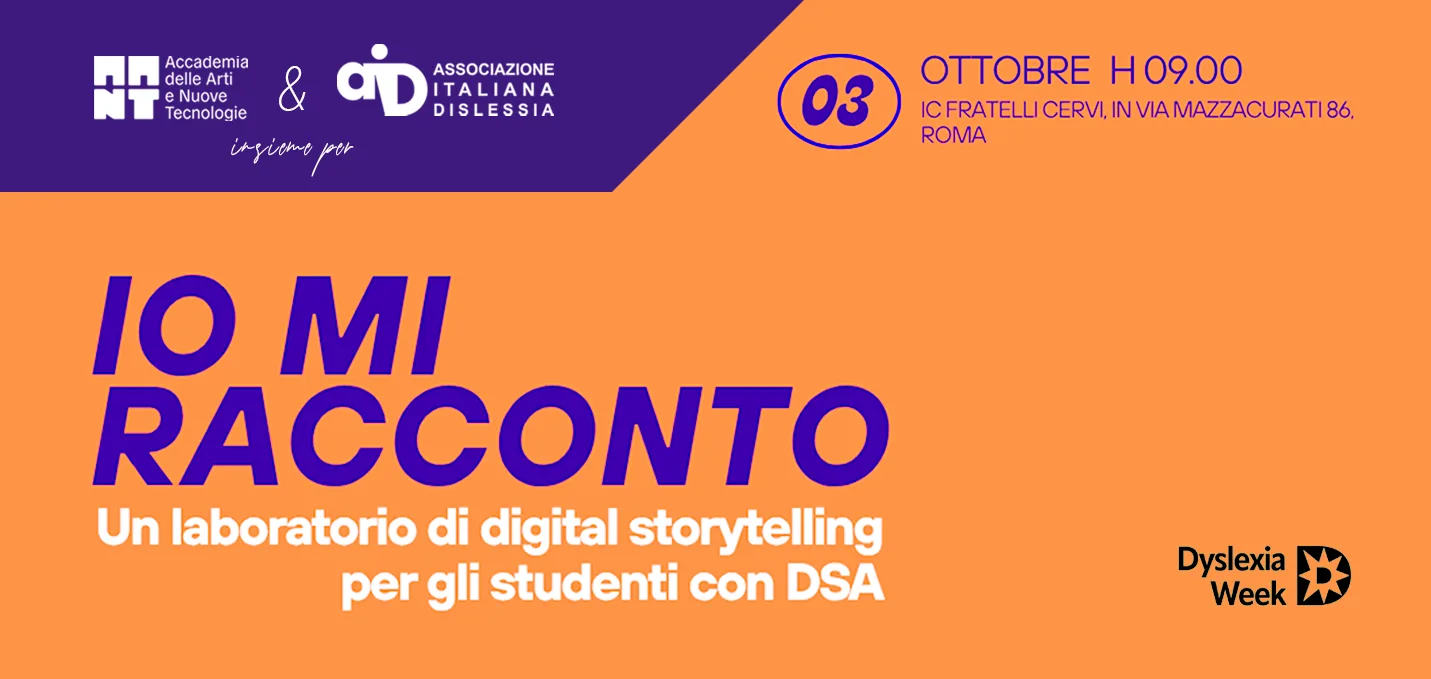
My Story: AANT and AID Join Forces to Turn Stories into Digital Languages

Telling your own story means choosing words, images, and sounds that can give shape to your experience. When these elements are combined with the tools of digital communication, a personal story can become a creative project to be shared with others.


This is the idea behind “My Story: a digital storytelling workshop for students with Specific Learning Disorders (SLDs)”, an initiative promoted by the Rome branch of the Italian Dyslexia Association (AID). The workshop will take place on Saturday, October 3, 2026, from 9:00 a.m. to 1:00 p.m., at IC Fratelli Cervi in Rome, ahead of National Dyslexia Week 2026.


The workshop will engage young people with Specific Learning Disorders in a journey focused on self-narration. Drawing on their own experiences, strengths, challenges, and the strategies they have developed throughout their learning journey, participants will be guided through the process of creating a story and subsequently transforming it through digital media.


AANT will take part in the initiative as a technical partner for the audiovisual, directing, and digital production components, continuing the collaboration and training activities developed with AID Rome. The workshop will feature Valentina Miniati, lecturer and AID trainer, alongside Valeria Grasso, AANT lecturer, and Valerio Di Paola, coordinator of AANT’s Videomaking course.


Creativity, technology, and inclusion come together in an experience where digital media are not simply a means of production, but a tool through which people can tell their own stories and convey the complexity of the present.


For further information about the programme and how to participate, please visit the event page on the AID Rome website.

Talking Maps, Living Memories: Performing Media Comes to AANT

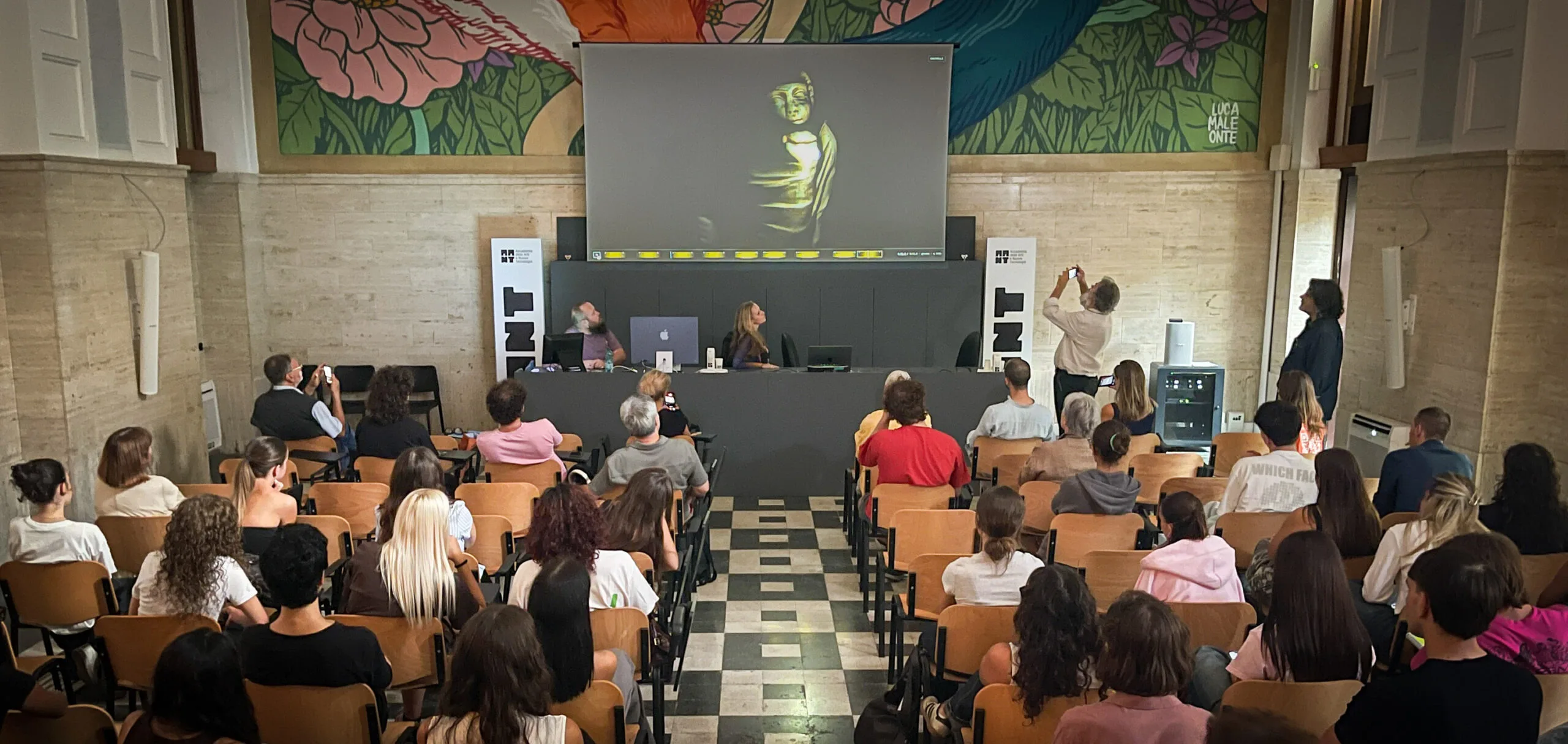
On 22 September, the Aula Magna at AANT became a space for exploring the intersection of memory and innovation with “Paesaggi Umani di Roma Plurale. Performing Media Storytelling per la Memoria Rigenerativa”, a project now in its second edition and part of the Rome Future Week programme.

The event brought to the Academy in Rome a reflection closely connected to contemporary research in the fields of art and new technologies: how can digital tools give voice to the places, stories and memories that shape the city?

“Paesaggi Umani di Roma Plurale” transforms the city into an environment to be explored, listened to and reinterpreted. Walkabouts, workshops, geolocated podcasts, augmented reality, video projections and Artificial Intelligence become tools for actively engaging students, citizens and performers in discovering the stories and memories of Rome’s neighbourhoods.

At the heart of the event at AANT was Performing Media Storytelling, a practice that brings together urban space, narrative and digital technologies, experimenting with new ways of building and sharing collective memory. Among the experiences presented was that of Polyhymnia, the Muse of Memory, whose 2nd-century AD statue was discovered beneath Villa Fiorelli in 1928 and is now being reinterpreted through a digital double.

A special thanks to Carlo Infante and Nuvola Project for the experience they offered to all our students.

From Ideas to Projects: Master ACES Thesis Presentations at AANT

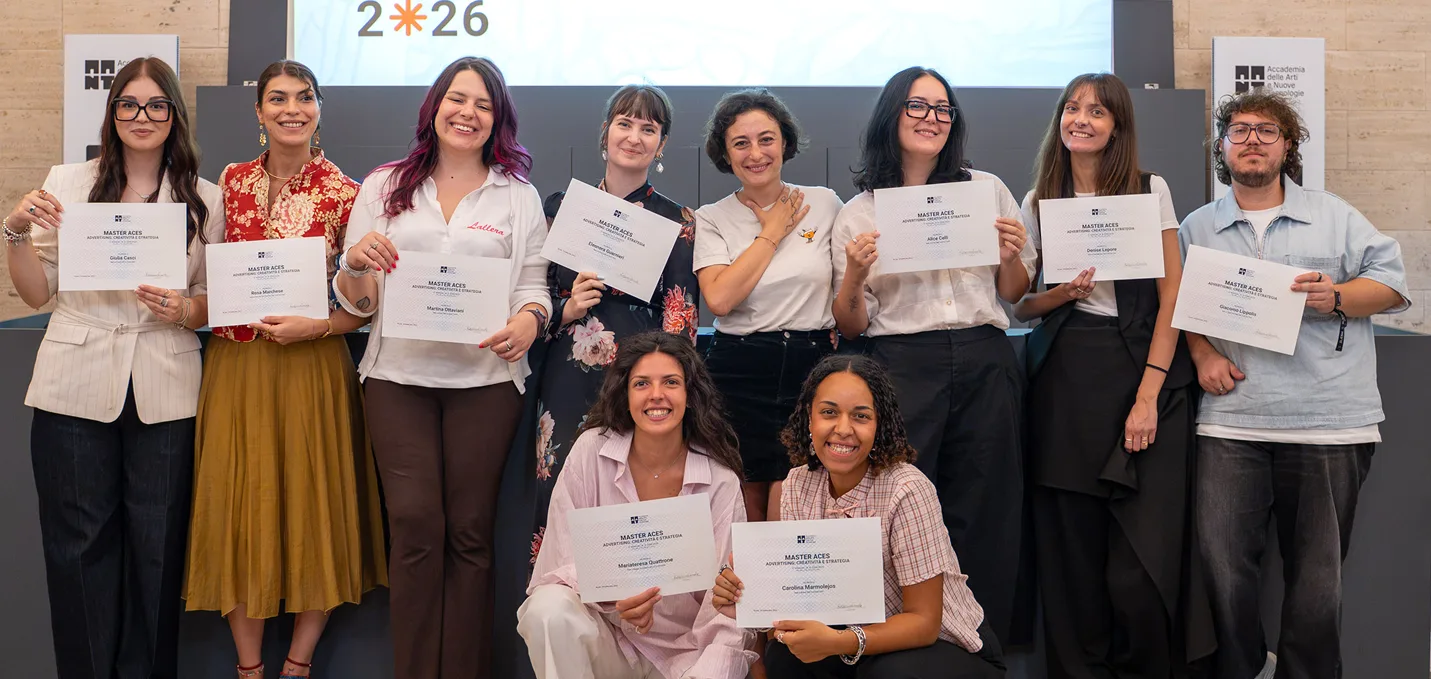
On September 18, the Master ACES – Advertising: Creativity and Strategy thesis presentations took place in AANT’s Aula Magna, marking the conclusion of the academic journey while showcasing the results of a process shaped by research, design, dialogue and experimentation.

Nine students took centre stage during the day, presenting three group projects:

-Alice Celli, Giacomo Lippolis e Denise Lepore: “18 baci”;

-Giulia Casci, Rosa Marchese e Carolina Marmolejos: “Exposed – Nothing to hide”;

-Martina Ottaviani, Mariateresa Quattrone ed Eleonora Guarnieri: “Lallera – 592 modi per non nominarla, tutti validi per parlarne”.


The thesis represents a significant milestone in the learning journey: a moment when knowledge, tools and design skills come together in a project that reflects both an individual and a shared vision. The September 18 presentations therefore marked the end of one chapter in the Master ACES journey while opening another, as the skills and experiences developed at the Academy move forward into new professional and creative contexts. Congratulations to our students on reaching this important milestone!