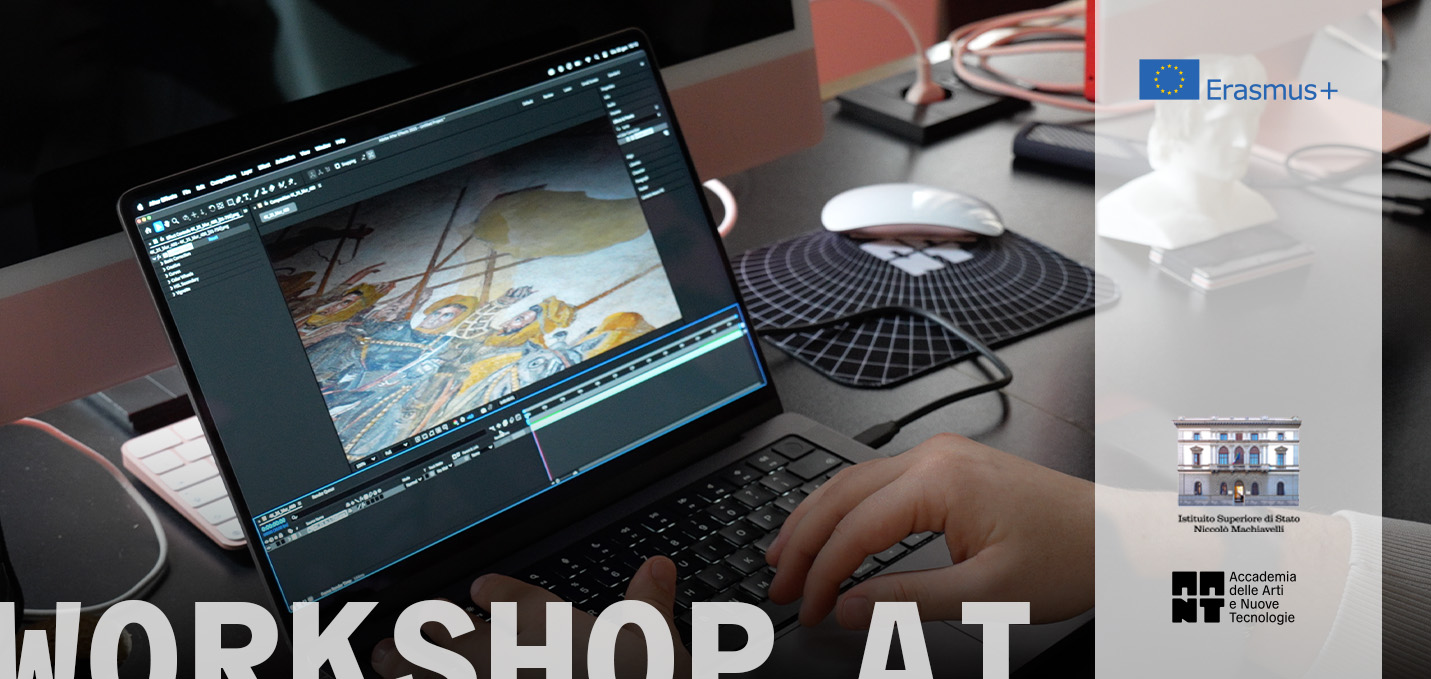
Erasmus+ at AANT: Workshop on Gen AI, Identity and Human Rights

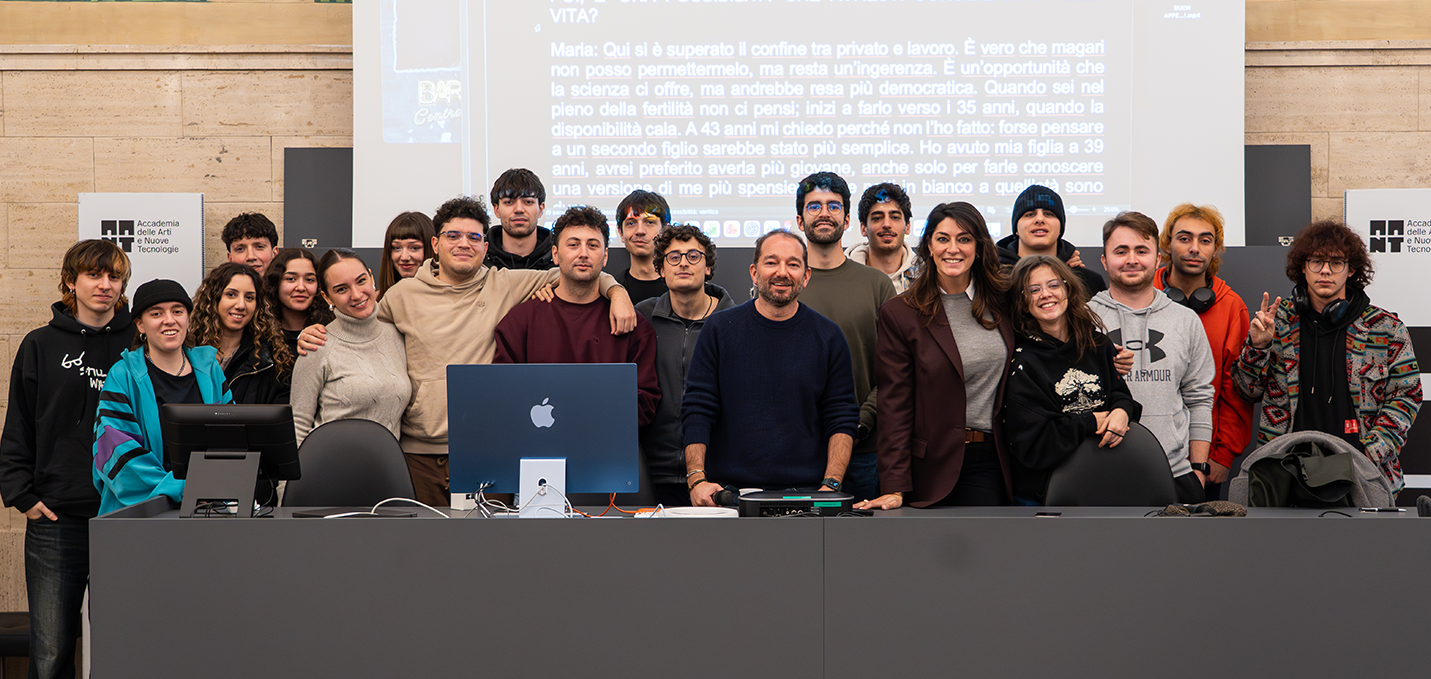
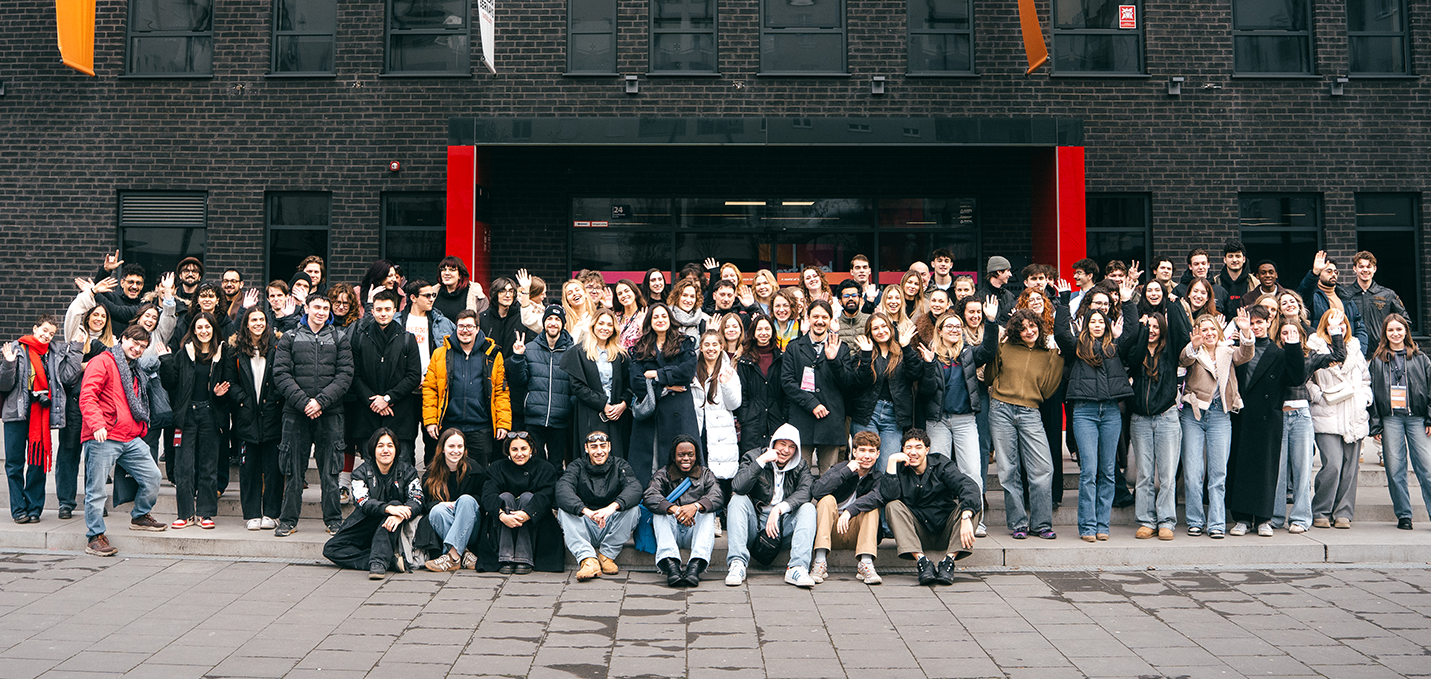
On Thursday, February 12, AANT hosted the workshop “Faces Reconstructed: Generative AI, Identity and Human Rights”, as part of the Erasmus+ Dissemination Week promoted by Liceo Machiavelli in Rome. The initiative, included in the international week entitled “Portraits, Self-Portraits and Inscriptions: The Faces of Identity and Human Rights Across Time,” brought together an international group of 20 Erasmus+ students, 10 Italian, 5 German and 5 Swedish, accompanied by 4 international teachers, with a shared objective: to explore the role of the face, image and self-representation across historical eras and within emerging technologies.

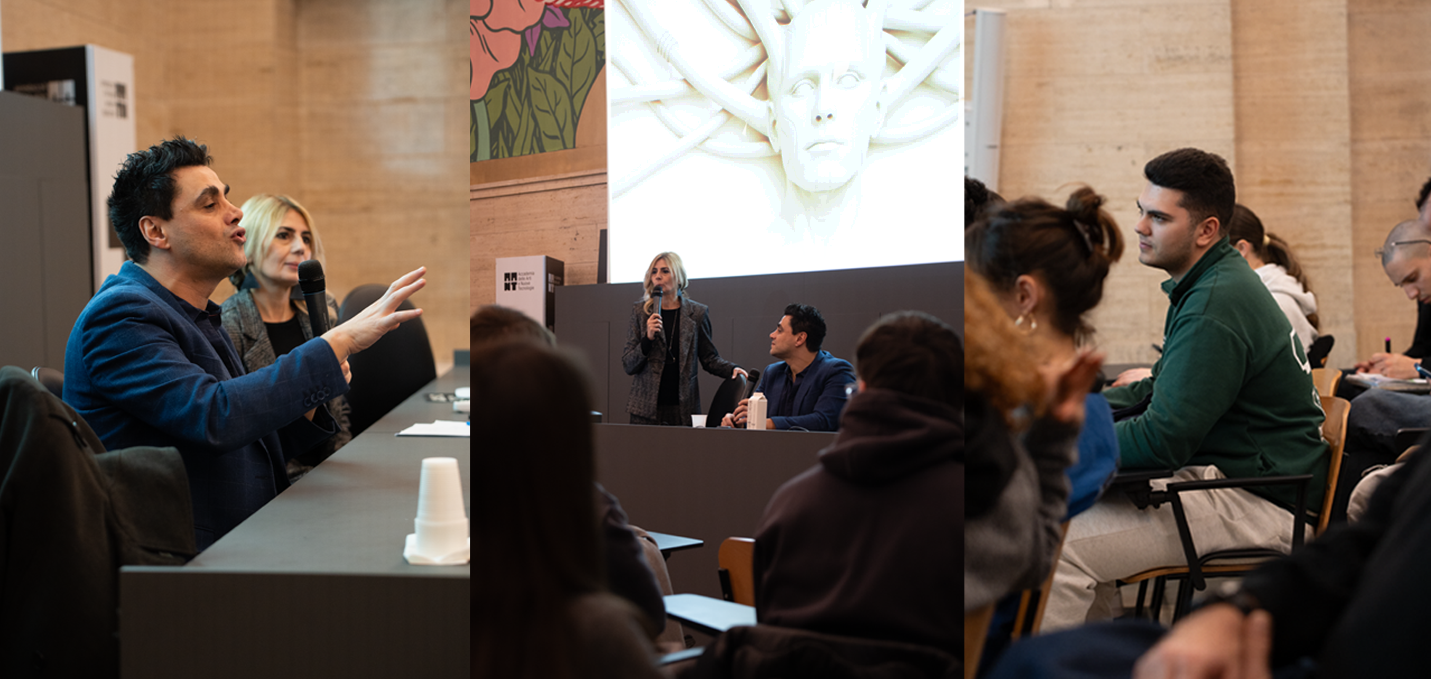
Led in English by Professor Davide Cardea, the workshop offered a solid educational and hands-on experience focused on highly relevant topics: identity, power, human rights and visual representation in the digital age. The session combined historical reflection with practical experimentation, starting from AANT’s creative project “Frammenti”, developed to merge historical research, contemporary art and digital technologies, and culminating in the documentary “Il volto di Alessandro” (“The Face of Alexander”), broadcast on Italian national television (RAI). Students had the opportunity to directly engage with the customized GPT tool “Finding AM,” which was used to investigate the historically attributed features of Alexander the Great’s face, examine sources, clarify ambiguities and experiment firsthand with AI-assisted interpretative image processes.

The second part of the workshop focused on a product-driven approach: each participant translated their reflections into visual and conceptual outputs, working on reconstruction models, interpretative hypotheses and practical generative AI tools. This methodology made the experience not only theoretical, but tangibly creative and productive.

The day concluded with a collective presentation session, during which students shared and discussed their work, reflecting on their choices, limitations and the potential of the technologies used. The final discussion highlighted crucial issues, including the subtle boundary between historical reconstruction and deepfake, and more broadly the ethical responsibility connected to the use of artificial intelligence in representing the human face — a symbol of identity, memory and rights.
AANT Bachelor’s Degree Graduation: Design, Research and Contemporary Vision

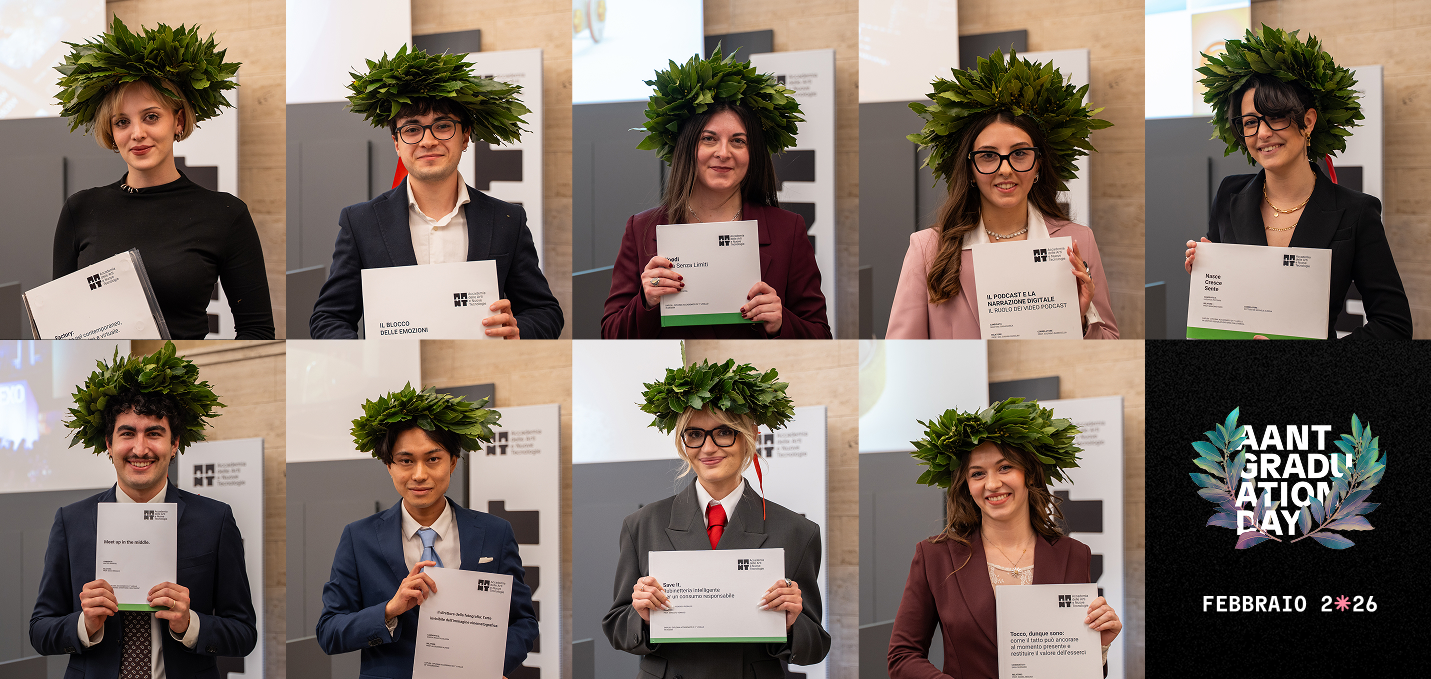
On February 14th, AANT hosted a new graduation session for its Bachelor’s Degree programs, a key milestone in the students’ academic journey and an important opportunity to publicly present their final projects. It was an intense and engaging day, shaped by themes ranging from the identity of the contemporary artist to digital storytelling, from design as a sensory experience to film culture. The graduates presented projects capable of combining theoretical research, project development and critical awareness, confirming the interdisciplinary approach that defines AANT’s educational offering.

Below are the names of the candidates and the titles of their final projects:

Giordana Giovannini “Factory: l’artista nel contemporaneo, tra spazio fisico e virtuale”

Gabriele Felci “Il blocco delle emozioni” 

Giulia Palomba “WOØDY – Crea senza limiti”

Martina Gianandrea “Il Podcast e la Narrazione Digitale – Il ruolo dei Video Podcast”

Ludovica Piccinini “Nasce, cresce, sente”

Matteo Sinopoli “Meet up in the Middle”

Shodai Nagata Colcera Il Direttore della fotografia: l’arte invisibile dell’immagine cinematografica”

Federica Pieralisi SAVE IT. Rubinetteria”

Sara Gherardi “Tocco, dunque, sono: come il tatto può ancorare al momento presente e restituire il valore dell’esserci”

We wish all of them a professional future filled with achievements and satisfaction.

Master ViDI Thesis Session: Visions, Matter and New Contemporary Imaginaries

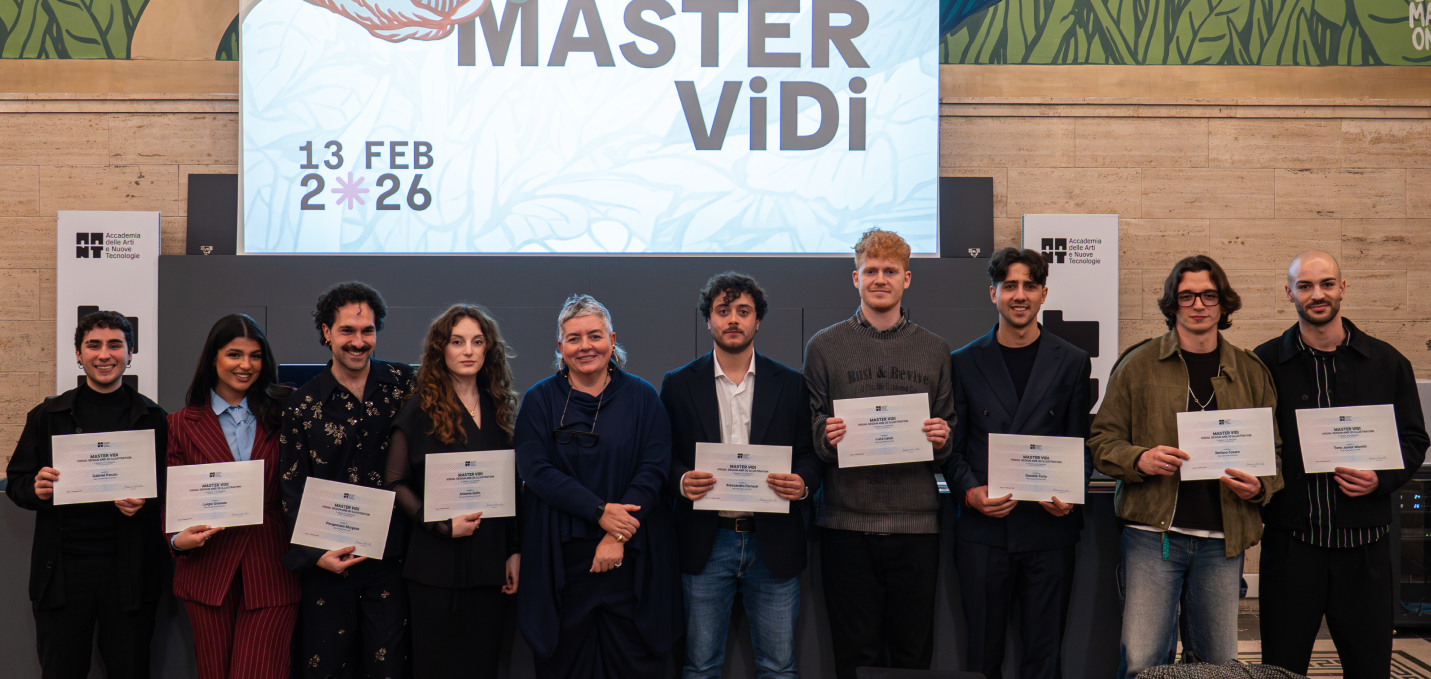
On February 13th, the Master ViDI, Visual Design and 3D Illustration thesis session took place in the Aula Magna of AANT. The event highlighted the depth and richness of an educational journey focused on visual experimentation, project-based research and the construction of contemporary imaginaries. During the session, students presented projects spanning art, design, visual culture and digital storytelling, demonstrating both strong methodological maturity and critical awareness.

Below are the names of the candidates and the titles of their thesis projects:

Stefano Fusaro “Pareidolia”

Tony Junior Moretti “L’eco della materia. Ronchamp e il dovere di non ripetere il passato”

Arianna Gallo “In somnis. Inner landscape”

Piergennaro Murgese “Bacco, Tabacco e Venere: dove il sogno si traveste nel reale”

Luigia Granato “Stranger Things. The upside down”

Gabriel Porzio “Rast romance. Un’apologia dei ratti”

Alessandro Ferrauti “Dove in pochi guardano”

Luca Lausi “Re:design iconico. Il confine tra arte e design nell’oggetto iconico”.

Watch them now on YouTube!

AANT at the Triennale di Milano: students contribute to Alex Braga’s light installation

AANT takes part in the exhibition “E nel futuro…”, on view from February 6 to 22 at the Triennale di Milano, through the direct involvement of its students in the realization of the light-based and interactive installation by Alex Braga, member of the GeniaLAB Scientific Committee. The project confirms the role of the Rome-based Academy as a space for advanced education, experimentation, and dialogue between visual arts, digital technologies, and contemporary research.


Curated by Gabriele Simongini and promoted by Enel, the exhibition brings together three key figures in the history of light as an artistic language, Giacomo Balla, Fernando Jacopozzi, and Alex Braga, within an immersive journey that spans the twentieth century and reaches today’s most current artistic practices. “E nel futuro…” offers a contemporary reinterpretation of the Futurist legacy, in which light becomes a tool for engaging with space, the body, and perception. The exhibition path opens with a digital reinvention of Giacomo Balla’s historic stage design for “Feu d’artifice” (1917), animated by Alex Braga, and continues with a visual evocation of the work of Fernando Jacopozzi, a pioneer of urban lighting and a central figure in the transformation of Paris into the Ville Lumière. The exhibition weaves together historical memory, technological innovation, and a forward-looking vision, highlighting light as both artistic material and symbolic medium.


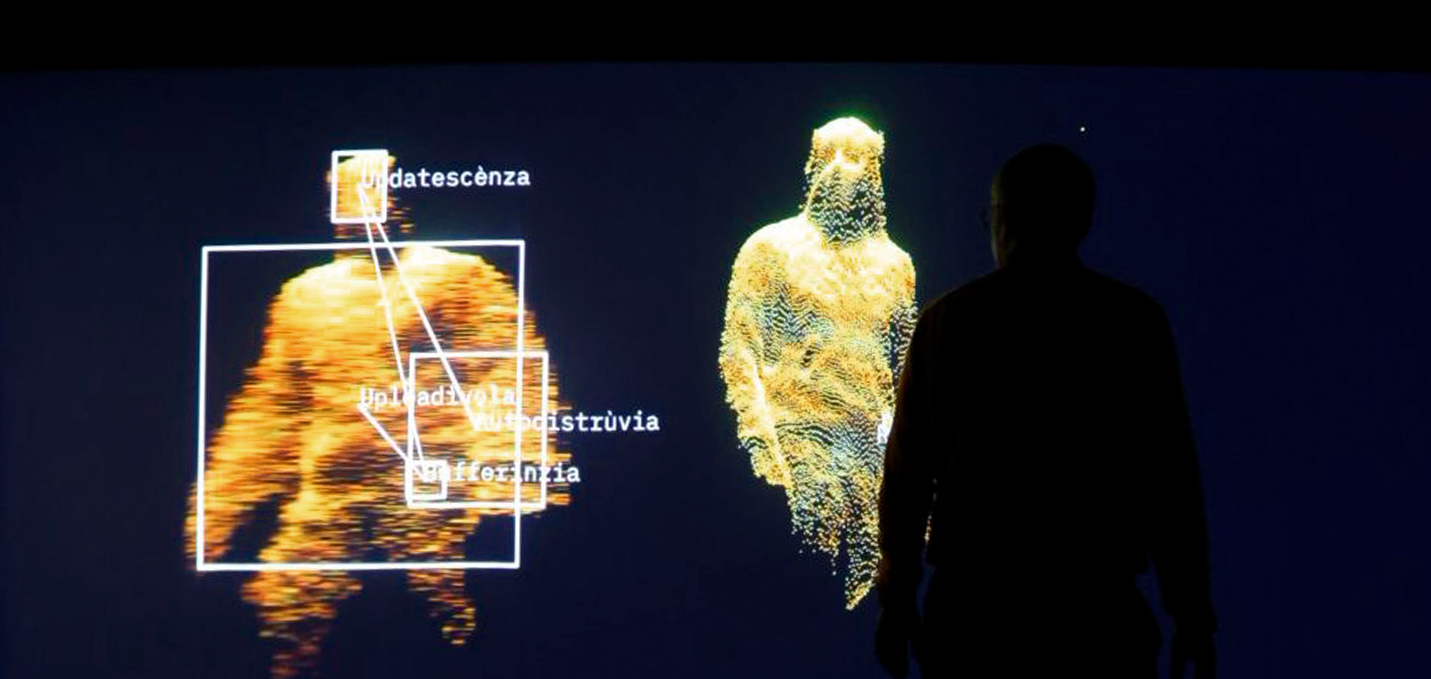
At the core of the exhibition is Alex Braga’s interactive installation “Automatic Impermanence”, an immersive dark room in which the audience is engaged in a sensory and perceptual experience—a metaphorical journey that brings together technology, artificial intelligence, and introspection. The work reflects on themes of identity, transformation, and impermanence, placing the relationship between human beings and digital systems at its center.


Within this high-profile cultural context, AANT promoted a project-based farm that enabled students from its undergraduate programs to actively collaborate in the realization of Alex Braga’s light installation, gaining hands-on experience with contemporary artistic production processes. The students involved in the project are:


  • Francesca Laghi
  • Adriano Roman
  • Gaia Piersanti
  • Jacopo Parodi
  • Aurora Conte
  • Giorgio Nelson Castellani
  • Gaia Mineo Lanza
  • Maurizio Matta
  • Benedetta Perri
  • Lara Lucia Sichetti

Meet the Expert: Margherita Pellino presents the Fondazione Magistretti

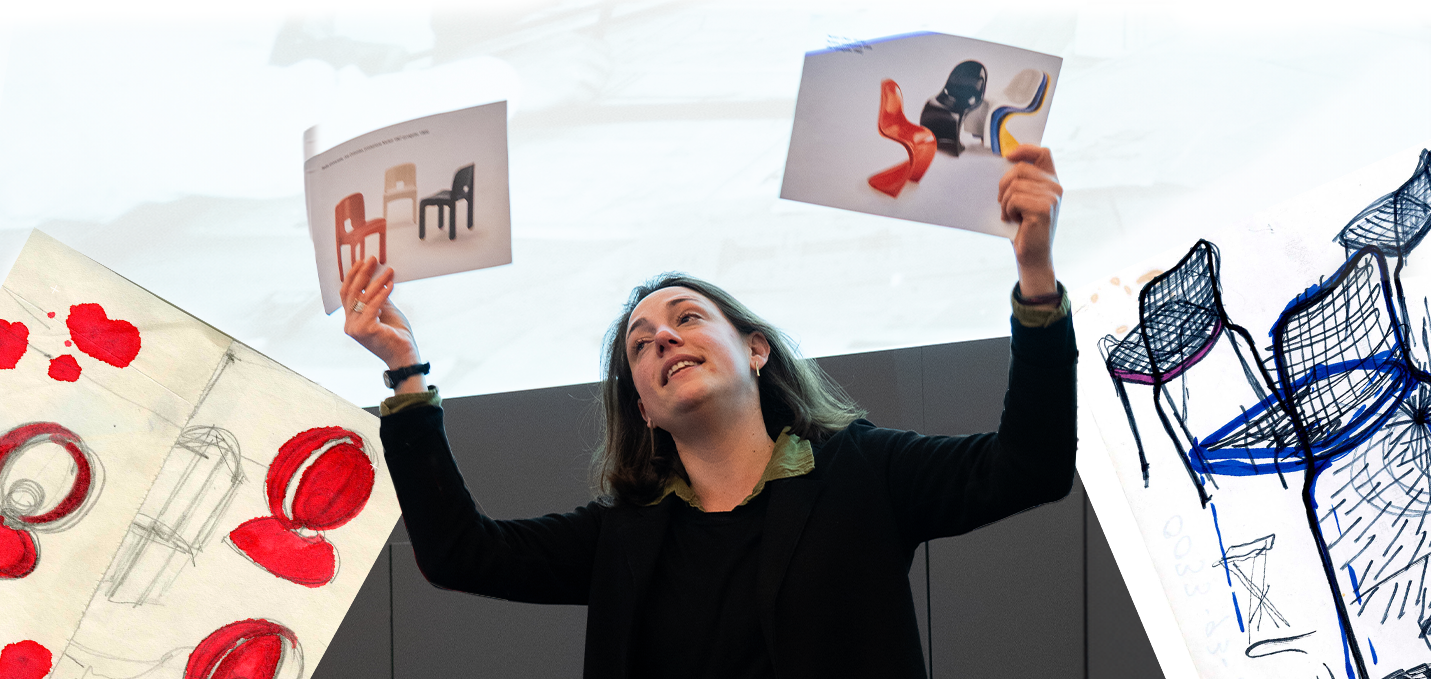
The Meet the Expert series at AANT continued on Wednesday, January 29, with an event dedicated to dialogue between project culture, research, and institutions. The guest of the meeting was Margherita Pellino, representing the Fondazione Magistretti, who presented the Foundation’s activities and vision. The Fondazione Magistretti is an institution dedicated to the preservation and dissemination of the design and cultural legacy of Vico Magistretti, a central figure in 20th-century Italian design and architecture. Through exhibitions, editorial projects, educational initiatives, and research activities, the Foundation promotes a contemporary reflection on design, keeping alive the dialogue between memory, innovation, and experimentation.

The event, moderated by Professor Ernesto Venanzi and prof. Cristiano Sammarco, of the bachelor’s degree Design – Interior & Product, aimed to introduce the Fondazione Magistretti by outlining its main areas of action, ongoing projects, and participation opportunities open to students, researchers, and professionals. Margherita Pellino’s contribution highlighted the importance of building networks between institutions, archives, education, and the professional world, fostering an open dialogue with younger generations.

The meeting took the form of an open discussion, encouraging reflection on themes related to design, cultural project development, and research, and providing undergraduate students with useful tools to better understand the dynamics of contemporary cultural institutions.

Guest note: Margherita Pellino collaborates with the Fondazione Magistretti, working on cultural projects and valorization activities, with a particular focus on design, archives, and the transmission of knowledge.

Meet the Expert: Paolo Palermo and the New Forms of Storytelling Between Documentary and Multimedia Journalism

The Meet the Expert series continues with an event dedicated to storytelling the real through cinema, multimedia, and journalism. On Monday, January 27, AANT hosted Paolo Palermo, author and professional in audiovisual journalism, for an in-depth discussion on the transformations of contemporary narrative forms.

The meeting, moderated by Professor Valerio Di Paola, coordinator of the bachelor’s degree in Videomaking, Story, Cinema e Media Design, retraced some key stages of Palermo’s research and professional path, from traditional documentary filmmaking—also through the use of archival materials—to the webdoc, understood as a hybrid narrative form capable of intertwining videomaking, photography, and writing for the web.

During the event, the differences between reportage and investigative journalism were explored, with a focus on the role of videomaking in television journalism and the new responsibilities of the author within an ever-evolving media landscape. Particular attention was given to how storytelling forms have changed, the relationship with sources, and narrative construction in the digital era.

What emerged was a dialogue between different languages—cinema, multimedia, and journalism—which provided undergraduate students with critical tools to better understand new audiovisual professions and the contemporary challenges of representing reality.

Guest note: Paolo Palermo has been working for many years in the field of television investigative journalism and documentary filmmaking. His work includes reportage, in-depth investigations, and audiovisual projects focused on current affairs and social analysis.

From Rai to classroom: Elisa Isoardi guest in AANT

Yesterday, during the Creative Writing course taught by Professor Giona Peduzzi, students from the Videomaking, Story, Cinema and Media Design programme had the opportunity to meet television host Elisa Isoardi. A long-standing Rai author with over twenty years of experience in the television industry, from the Sanremo Music Festival to major entertainment formats, Professor Peduzzi guides third-year students through a highly practical and professional-oriented pathway in screenwriting, with a strong focus on the dynamics and demands of contemporary broadcasting.

At the heart of today’s discussion was Elisa Isoardi herself, a well-known television presenter with a long career in public service broadcasting. During the session with students at the Rome-based Academy, Isoardi shared professional insights into building effective audiovisual narratives, adapting content across different platforms, and understanding the crucial relationship between text, rhythm and image. Drawing on examples from her experience in live television, she encouraged critical reflection among participants, emphasizing how writing for video requires rigor, creativity and a deep understanding of the audience. The meeting concluded with a Q&A session, giving students the opportunity to engage directly with the guest speaker.

AANT in Zagreb with Erasmus+

Ten AANT students and two faculty members are currently in Zagreb to take part in two Blended Intensive Programmes (BIPs) organized by Algebra University, an Erasmus partner with which the Academy has been collaborating for the past three years. The AANT group will return to Rome on 17 January after spending a week working with lecturers and students from other European academies on shared projects.

Students are attending two courses. The first, Fundamentals of Video Production, focuses on the basics of audiovisual production and on developing skills related to video language, from planning through to production. Representing AANT are Elena Costantini, Denise Angrisani, Stefano Mastrobuoni, Maddalena Nasca, and Gabriele Sardone, accompanied by lecturer Matteo Quarta. The second, Creative Visual Project, is a strongly project-based programme structured as an international contest—a competitive format in which AANT has stood out over the years. In the previous edition, the contest was won by the Rome Academy itself. This year’s participants are Benedetta Perri, Maurizio Matta, Aurora Conte, Angelo Nawfal, and Aurora Cinti, accompanied by lecturer Raffaele Grasso, who also served as the project lead last year.

Participation in the Zagreb BIPs represents a meaningful growth opportunity for AANT students, who will be able to work in international teams, engage with real briefs, and develop projects within a multicultural, intensive, and inspiring environment.

Claudio Paolucci presents Nati cyborg: a reflection between artificial intelligence and language

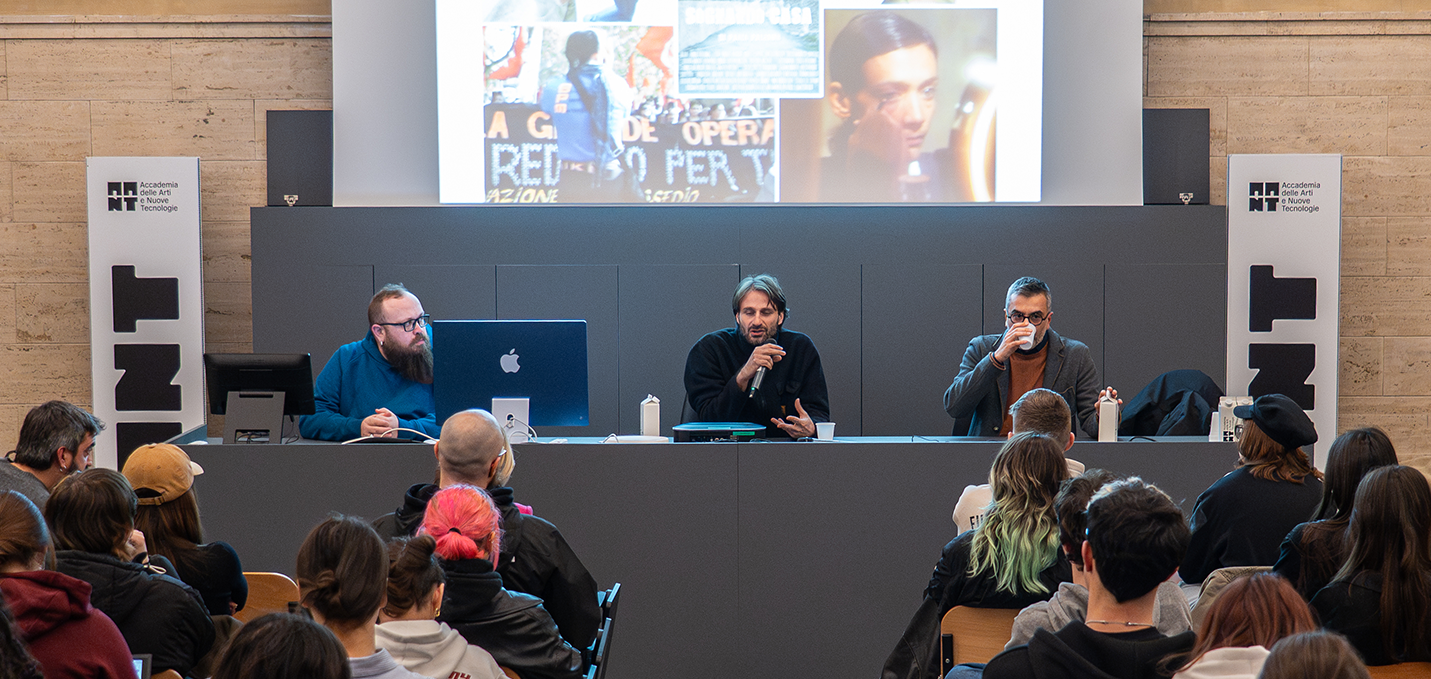
AANT has introduced a new event under the GeniaLAB banner, the research and discussion format dedicated to contemporary languages and their cultural transformations. At the heart of the event—moderated by Prof. Gianna Angelini, AANT’s Scientific Director and Head of Internationalization—was a conversation on the relationship between artificial intelligence and language, featuring the presentation of the book Born Cyborgs by Prof. Claudio Paolucci, Full Professor at the University of Bologna.

During the meeting, the guest, together with the students, explored how the production of texts and modes of communication change radically when, alongside human beings, machines also “speak.” What do we mean today by understanding, intention, and creativity? What are the cultural, social, and ethical implications of the everyday use of artificial intelligence tools? Drawing on a semiotic perspective, the book highlights opportunities, ambiguities, and shadow areas within the new digital linguistic system. Today, generative AI is no longer an external object, but a mirror that forces us to question who we are and who we are becoming. This is a topic of great importance and interest for students enrolled in AANT’s three-year academic programs.

Speaker note: Claudio Paolucci is Full Professor of Philosophy and Theory of Languages in the Department of Philosophy and Communication at the University of Bologna, where he teaches Semiotics and Philosophy of Language. President of the Italian Society for the Philosophy of Language (SFL), he is the scientific coordinator of the International Center for Humanistic Studies “Umberto Eco.” His research focuses on language, cognition, and processes of meaning-making, with particular attention to the relationship between artificial intelligence and cultural practices. He is the author of numerous essays and landmark volumes in the contemporary theoretical landscape.

25th Hour at AANT: the creative marathon celebrates its 10th edition

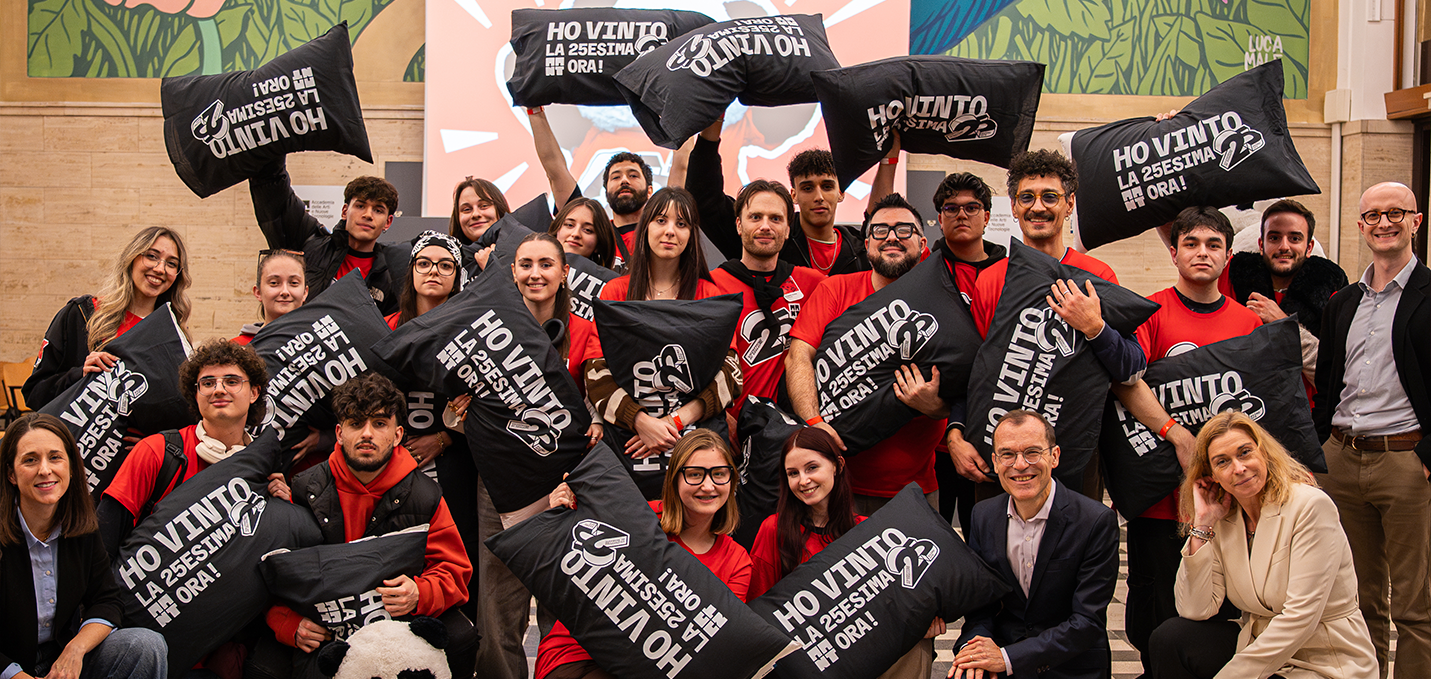
On 23 and 24 January, AANT hosted the 10th edition of the 25th Hour, the creative marathon that represents one of the most intense and defining moments of academic life. A symbolic milestone, celebrated through 24 hours of design, dialogue, and experimentation, where creativity was tested against a real, complex, and multidisciplinary brief.

Five teams competed, each assigned a colour (yellow, green, blue, orange, and red), and were tasked with working on an authentic professional assignment for two institutional clients: the Groupe des Ambassadeurs Francophones (GAF) and the Institut français Centre Saint-Louis (IFCSL), organiser of the Francofilm Festival.

For GAF, students were asked to design a new visual identity capable of representing its core values: dialogue, diversity, solidarity, respect for otherness, and peace. For IFCSL, students had to develop an integrated design system for the 16th edition of the Francofilm Festival: an official trailer video and its Instagram Reel version, a gamification concept, several proposals for festival space installations, and the design of the three official awards. The teams, made up of faculty and students from the three-year programmes, worked intensively for 24 hours.

What made this edition even more meaningful was its emotional dimension: the 25th Hour 2026 marked ten years of a format that tests skills, creative endurance, and the ability to work as a team, but above all builds relationships and a sense of belonging. Emotions, design tension, enthusiasm, and pride ran through the Academy for two consecutive days, also shared in real time on AANT’s social media channels.

At the end of the marathon, the red team took first place, standing out for its design coherence, conceptual strength, and execution quality. Only one winning team, but an experience shared by all participants, confirming the educational and human value of the 25th Hour.