AANT Graduation Sessions: Designing the Present, Imagining the Future

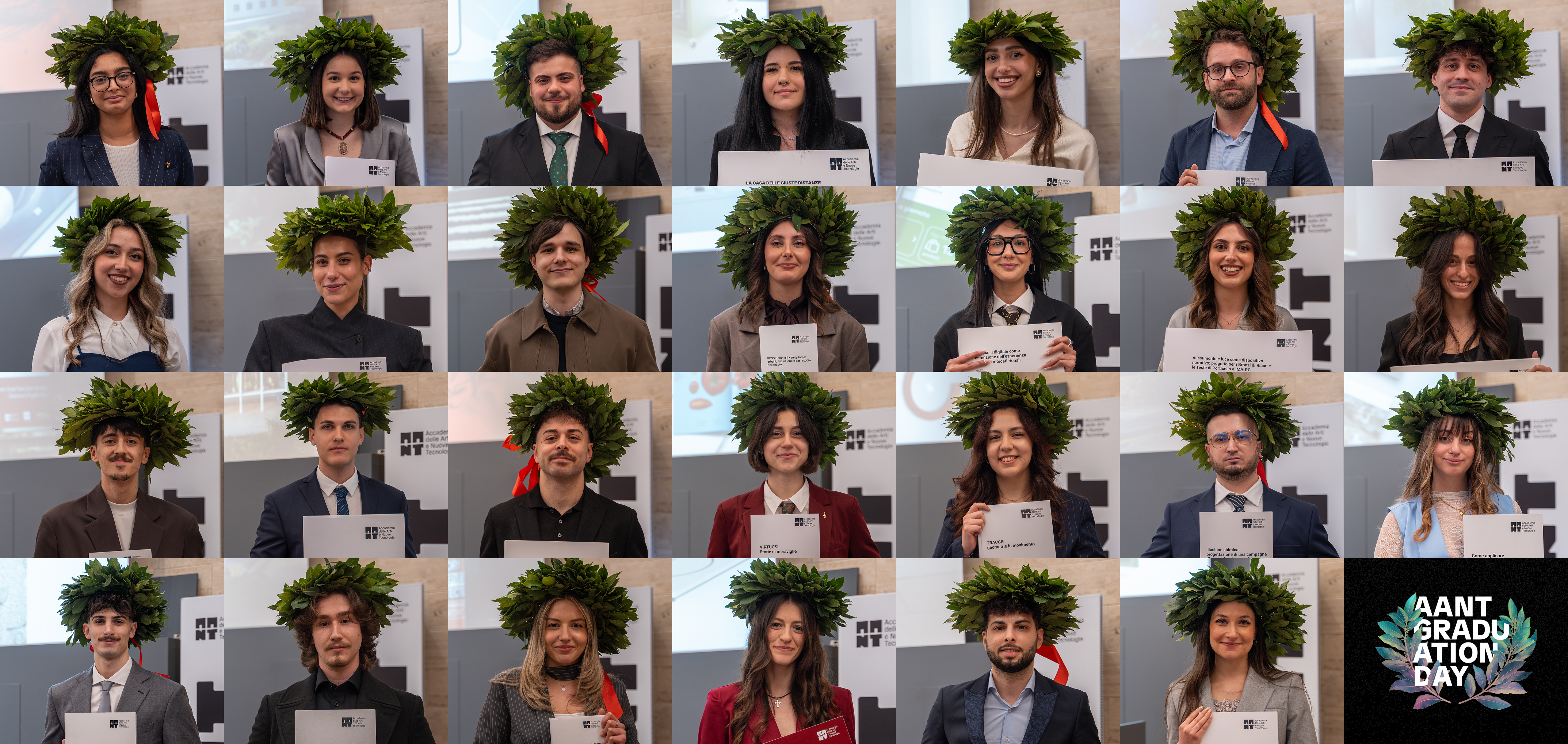
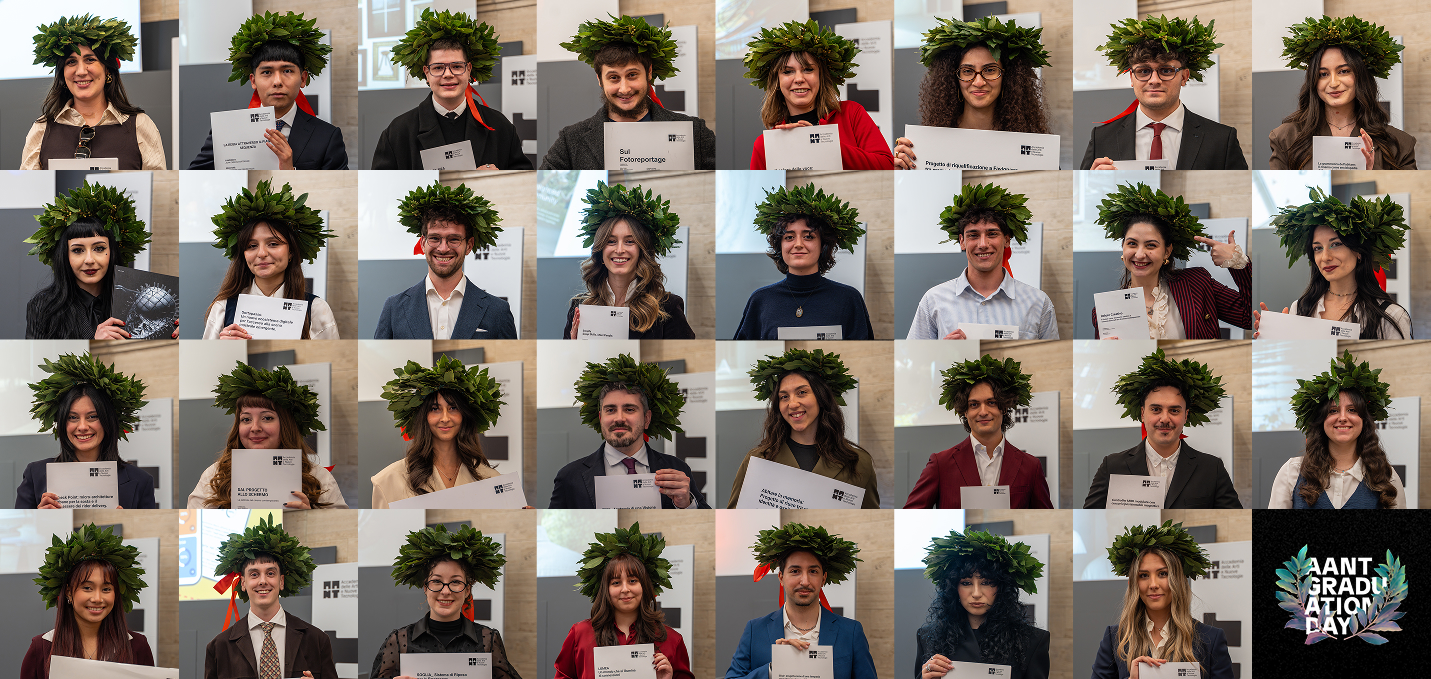
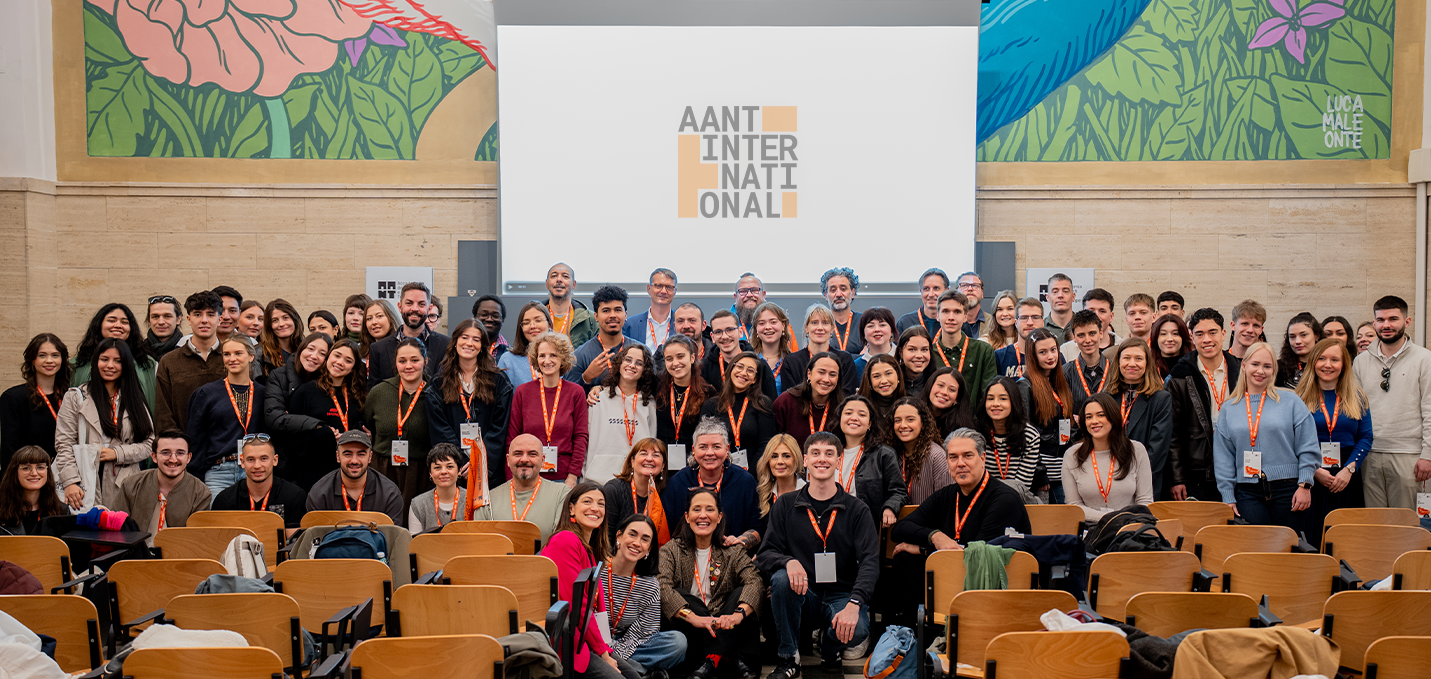
On February 27 and 28, AANT hosted the latest Bachelor’s Degree Graduation Sessions, two days dedicated to research, experimentation, and contemporary design project development. The theses presented explored a wide range of languages and disciplines, from film directing to interior design, from art direction to graphic design, from photography to urban planning, offering a contemporary and conscious perspective on the cultural, social, and technological transformations of our time.

Below are the names of the graduates and the titles of their final projects:

Elena Fierro — “MERCATO + Spazio di scambio, luogo di comunità”

Juan Carlos Cortopassi — “La regia attraverso il piano sequenza”

Lorenzo Paul Di Pastena — “Casa Mea”

Adriano Rosati — “Sul Fotoreportage”

Giulia Caiola — “Il colore della voce: l’arte murale a Roma dagli anni 2000 ad oggi”

Chiara Casolini — “La grammatica dell’abitare: il cinema come enciclopedia dello spazio domestico”

Sofia Fiore — “The Animated Uncanny: Horror Cinema as a Language of Contemporary Fears”

Alice Barbato — “Dal progetto allo schermo: ricerca teorica sulla pellicola nel cinema contemporaneo e realizzazione di un cortometraggio”

Jamila Orel — “La seconda vita delle storie. Il viaggio dell’adattamento cinematografico”

Gabriele Mottola — “IUMI: anatomia di una visione”

Sara Massucci — “Che cos’è la bellezza? Un’indagine tra pregiudizio ed emozioni nell’era dell’intelligenza artificiale”

Romina Emanuela Moisei — “Dolore Creativo. Il dolore come strumento creativo e comunicativo nell’art direction contemporanea”

Sofia Teresa Bucarelli — “Sottopasso. Un nuovo ecosistema digitale per l’accesso alla scena musicale emergente”

Luna Nicaise — “Swaply. Swap Skills. Meet People.”

Chiara Vessicchio — “Latrinalia: lo scarico sociale”

Francesca Ferrara — “Roovi: la tua guida agile nella giungla urbana”

Francesco Nava Mambretti — “BAND Identity: storydoing digitale e branding per una release musicale”

Luca Piccirilli — “Co-omprendi: progettazione di una piattaforma a supporto della diagnosi precoce dei DSA”

Ramona Munteanu — “LUMEA. Un mondo che si illumina di connessioni”

Alessandro Bietolini — “Controller MIDI modulare con cursori riposizionabili magnetici”

Martina Sirleto — “Progetto di riqualificazione a Favignana, tra memoria storica e identità del luogo”

Giuseppe Nicola Donadio — “Compatta”

Luca Rieder — “Apollo 98: il vuoto come misura dello spazio”

Simone Carnevali — “Modulovivo – Un sistema che restituisce spazio, tempo e cura alla vita vegetale”

Arianna Sordi — “Check Point: micro-architetture urbane per la sosta e il benessere dei rider delivery”

Annalisa De Iulis — “La Casa del Doganiere: progetto di riqualificazione e riuso di un sito dall’elevato patrimonio paesaggistico in Sicilia”

Giulia Di Giannantonio — “Abitare la memoria: progetto di riuso tra spazio, identità e ospitalità”

Sara Agellion — “Tra interno e quotidiano: ristrutturazione di una casa residenziale nelle Filippine”

Gaia Pugliese — “SOGLIA. Sistema di Riposo per le Emergenze”

Gianluca Panichi — “Elisir: progettazione di una lampada cromoterapeutica per il benessere sensoriale. Design e luce per l’equilibrio psicofisico”

Michela Iachetta — “Incastri Perfetti: quando il retail diventa relazione”
REFRESH WEEK 2026 AANT

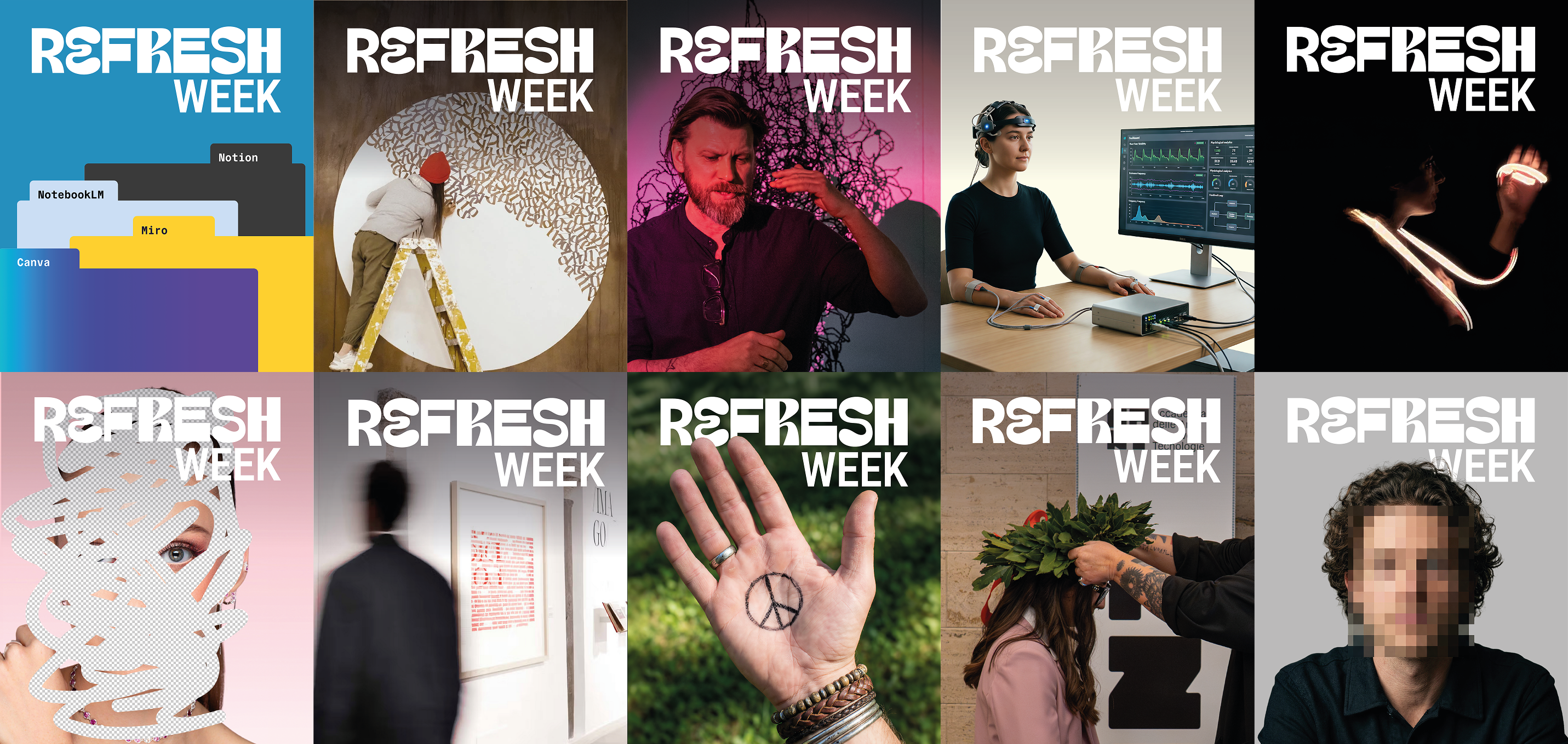
From March 2 to 6 AANT opened a dedicated space within the academic calendar: Refresh Week. Before resuming regular teaching activities, students from all Bachelor’s degree programmes were invited to take part in a week of workshops, talks and laboratories that move beyond the boundaries of individual study plans to embrace transversal, interdisciplinary and contemporary themes. An active pause, adistributed laboratory of ideas, tools and visions. The aim is to stimulate open thinking, experiment with diverse languages, and foster dialogue between body, technology, storytelling, design and social responsibility.

Below are the scheduled events:


  • AI EMBODIMENT – Biosignals and Emotional Artificial Intelligence
    A workshop at the intersection of psychology and data science exploring how biosignals can interact with a Large Language Model and open new creative perspectives.
    Lecturers: Pasquale Giaccone.
  • OffTheAXES: BoDySign
    An experimental laboratory where the body becomes a design tool. Movement, space and light are transformed into material for performative and project-based research. Lecturer: Silvia Cassetta
  • Light as a Critical Tool – LAACT Project
    An international talk dedicated to light as a cultural medium and critical tool within contemporary artistic practice.
    Lecturer: Robert Sochacki
  • Inhabiting Letters
    Two days of calligraphy and mural writing to transform typographic signs into a collective environmental experience.
    Lecturers: Marta Lagna and Cira Viggiano
  • Treccani Arte – Visit to Palazzo Treccani
    A direct dialogue with contemporary visual arts across publishing, graphic design and research.
    Lecturer: Sara Buoso
  • A Jewel for Peace
    Symbols, words and design to translate a universal idea into a concrete project concept.
    Lecturer: Valentina Downey
  • Managing a Crisis in the Social Media Era
    An intensive laboratory on digital reputation, the ethics of storytelling and narrative responsibility.
    Lecturer: Fondazione Libero Bizzarri
  • Say, Do, Kiss
    Writing and character development: giving voice and narrative coherence through dialogue and action.
    Lecturer: Marco Andreoli
  • Super Student Tool Kit – Study Smarter, Not Harder
    Method, digital tools and collaborative work to develop an end-to-end design approach.
    Lecturer: Simone Mari

AANT launches BIP Week: three Erasmus+ Blended Intensive Programmes underway

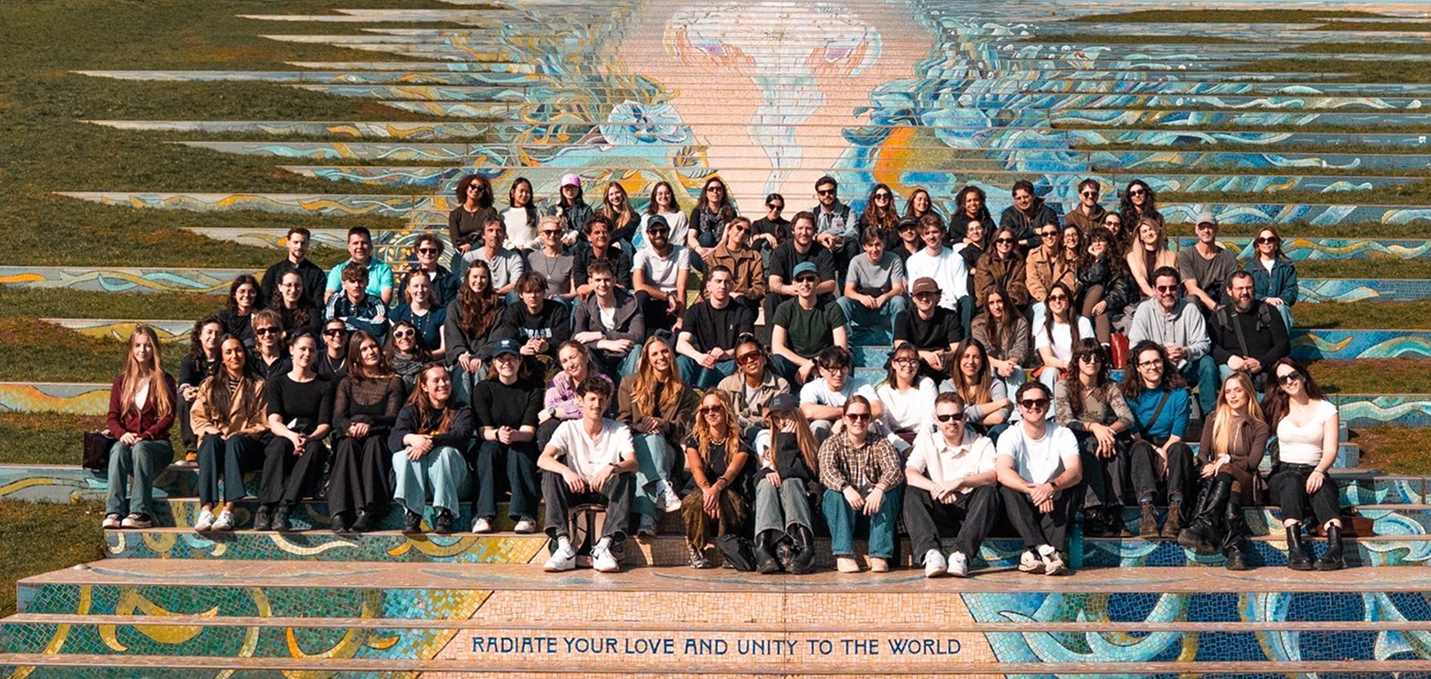
Starting today, Monday 2 March, and running until Friday 6 March, AANT opens its doors for BIP Week 2026—a week dedicated to internationalisation, academic exchange, and collaborative project development. The programme features three Erasmus+ Blended Intensive Programmes: the third edition of Light & the City, the second edition of Think, Prompt, Create, and the first edition of Secret Spaces. More than 80 students and faculty members will take part in the activities, arriving from Austria, Germany, Portugal, Spain, Belgium, France, and Croatia.

Now in its third edition, Light & the City offers a technical, educational, and experiential path devoted to Rome and to light as a design material. The programme brings photography and lighting design into dialogue and invites participants to interpret places, monuments, and urban landscapes through the transformations of light and an immersive on-site experience.

In its second edition, Think, Prompt, Create explores the transformative applications of generative artificial intelligence in communication, publishing, and the creative industries. Through online preparatory sessions, in-person workshops, and individual study, the programme combines technical skills with critical thinking, culminating in the production of a portfolio of projects developed with tools such as ChatGPT, Midjourney, and RunwayML.

Making its debut, Secret Spaces focuses on museums and lesser-known exhibition venues as places of inclusion, knowledge, and human and social development. The programme experiments with immersive and multisensory modes of engagement, integrating physical and digital devices; the first workshop is scheduled at the Centrale Montemartini Museum, where participants will also develop virtual reality experiences accessible via Oculus.

BIP Week brings together an international network of European partners. The partners involved are: VERN (Zagreb), IPCA (Barcelos), Polytechnic Institute of Portalegre, Hochschule der Medien (Stuttgart), L’École de design (Nantes), Algebra Bernays University (Zagreb), Artevelde (Ghent), and die Angewandte (Wien).

Until Friday 6 March, BIP Week will turn AANT into an international hub for dialogue, experimentation, and shared project work—reflecting the Erasmus+ BIP format, which combines virtual collaboration, short-term in-person mobility, and shared learning outcomes.

Creativity in Action: A Week of Immersive Learning at AANT with Liceo Argan and IIS Galilei

From February 16 to 20, AANT opened its classrooms and laboratories to two leading local schools: Liceo Artistico Giulio Carlo Argan and IIS Galileo Galilei. The initiative unfolded in two dedicated sessions and involved a total of 39 students in a 20-hour immersive learning experience focused on Graphic Design and Videomaking.


For Liceo Artistico Argan, 18 fourth-year students from the Fine Arts program were guided through the development of a visual communication project connected to the cultural event “Più libri, più liberi.” During four hours of daily lessons, participants explored every stage of the creative process: from the development of the visual concept to the creation of illustrations, culminating in the typographic composition of the poster. This comprehensive path combined design thinking and technical skills, with professional use of Adobe Photoshop and Illustrator. The objective was not only to produce a graphic outcome, but to understand the structure of a design project, the dynamics of cultural communication, and the importance of visual coherence.


At the same time, 21 third-year students from the Graphics and Communication program at IIS Galilei took part in a workshop dedicated to audiovisual languages. The laboratory introduced students to the world of videomaking through a structured, hands-on experience: narrative concept development and scriptwriting, storyboard creation, directing and filming exercises, and final editing using Adobe Premiere. The final result was an original audiovisual spot, developed through collaborative work that allowed students to engage with the real dynamics of video production, experiencing first-hand the interaction between creativity, technical skills, and on-set organization.


This initiative is part of AANT’s ongoing collaboration with upper secondary schools, aimed at offering immersive and career-oriented educational experiences in the fields of visual arts, design, and digital technologies. Through structured laboratory activities, the Academy promotes active learning based on practice, experimentation, and direct engagement with professional tools and methodologies.

Erasmus+ at AANT: Workshop on Gen AI, Identity and Human Rights

On Thursday, February 12, AANT hosted the workshop “Faces Reconstructed: Generative AI, Identity and Human Rights”, as part of the Erasmus+ Dissemination Week promoted by Liceo Machiavelli in Rome. The initiative, included in the international week entitled “Portraits, Self-Portraits and Inscriptions: The Faces of Identity and Human Rights Across Time,” brought together an international group of 20 Erasmus+ students, 10 Italian, 5 German and 5 Swedish, accompanied by 4 international teachers, with a shared objective: to explore the role of the face, image and self-representation across historical eras and within emerging technologies.

Led in English by Professor Davide Cardea, the workshop offered a solid educational and hands-on experience focused on highly relevant topics: identity, power, human rights and visual representation in the digital age. The session combined historical reflection with practical experimentation, starting from AANT’s creative project “Frammenti”, developed to merge historical research, contemporary art and digital technologies, and culminating in the documentary “Il volto di Alessandro” (“The Face of Alexander”), broadcast on Italian national television (RAI). Students had the opportunity to directly engage with the customized GPT tool “Finding AM,” which was used to investigate the historically attributed features of Alexander the Great’s face, examine sources, clarify ambiguities and experiment firsthand with AI-assisted interpretative image processes.

The second part of the workshop focused on a product-driven approach: each participant translated their reflections into visual and conceptual outputs, working on reconstruction models, interpretative hypotheses and practical generative AI tools. This methodology made the experience not only theoretical, but tangibly creative and productive.

The day concluded with a collective presentation session, during which students shared and discussed their work, reflecting on their choices, limitations and the potential of the technologies used. The final discussion highlighted crucial issues, including the subtle boundary between historical reconstruction and deepfake, and more broadly the ethical responsibility connected to the use of artificial intelligence in representing the human face — a symbol of identity, memory and rights.

AANT Bachelor’s Degree Graduation: Design, Research and Contemporary Vision

On February 14th, AANT hosted a new graduation session for its Bachelor’s Degree programs, a key milestone in the students’ academic journey and an important opportunity to publicly present their final projects. It was an intense and engaging day, shaped by themes ranging from the identity of the contemporary artist to digital storytelling, from design as a sensory experience to film culture. The graduates presented projects capable of combining theoretical research, project development and critical awareness, confirming the interdisciplinary approach that defines AANT’s educational offering.

Below are the names of the candidates and the titles of their final projects:

Giordana Giovannini “Factory: l’artista nel contemporaneo, tra spazio fisico e virtuale”

Gabriele Felci “Il blocco delle emozioni” 

Giulia Palomba “WOØDY – Crea senza limiti”

Martina Gianandrea “Il Podcast e la Narrazione Digitale – Il ruolo dei Video Podcast”

Ludovica Piccinini “Nasce, cresce, sente”

Matteo Sinopoli “Meet up in the Middle”

Shodai Nagata Colcera Il Direttore della fotografia: l’arte invisibile dell’immagine cinematografica”

Federica Pieralisi SAVE IT. Rubinetteria”

Sara Gherardi “Tocco, dunque, sono: come il tatto può ancorare al momento presente e restituire il valore dell’esserci”

We wish all of them a professional future filled with achievements and satisfaction.

Master ViDI Thesis Session: Visions, Matter and New Contemporary Imaginaries

On February 13th, the Master ViDI, Visual Design and 3D Illustration thesis session took place in the Aula Magna of AANT. The event highlighted the depth and richness of an educational journey focused on visual experimentation, project-based research and the construction of contemporary imaginaries. During the session, students presented projects spanning art, design, visual culture and digital storytelling, demonstrating both strong methodological maturity and critical awareness.

Below are the names of the candidates and the titles of their thesis projects:

Stefano Fusaro “Pareidolia”

Tony Junior Moretti “L’eco della materia. Ronchamp e il dovere di non ripetere il passato”

Arianna Gallo “In somnis. Inner landscape”

Piergennaro Murgese “Bacco, Tabacco e Venere: dove il sogno si traveste nel reale”

Luigia Granato “Stranger Things. The upside down”

Gabriel Porzio “Rast romance. Un’apologia dei ratti”

Alessandro Ferrauti “Dove in pochi guardano”

Luca Lausi “Re:design iconico. Il confine tra arte e design nell’oggetto iconico”.

Watch them now on YouTube!

AANT at the Triennale di Milano: students contribute to Alex Braga’s light installation

AANT takes part in the exhibition “E nel futuro…”, on view from February 6 to 22 at the Triennale di Milano, through the direct involvement of its students in the realization of the light-based and interactive installation by Alex Braga, member of the GeniaLAB Scientific Committee. The project confirms the role of the Rome-based Academy as a space for advanced education, experimentation, and dialogue between visual arts, digital technologies, and contemporary research.


Curated by Gabriele Simongini and promoted by Enel, the exhibition brings together three key figures in the history of light as an artistic language, Giacomo Balla, Fernando Jacopozzi, and Alex Braga, within an immersive journey that spans the twentieth century and reaches today’s most current artistic practices. “E nel futuro…” offers a contemporary reinterpretation of the Futurist legacy, in which light becomes a tool for engaging with space, the body, and perception. The exhibition path opens with a digital reinvention of Giacomo Balla’s historic stage design for “Feu d’artifice” (1917), animated by Alex Braga, and continues with a visual evocation of the work of Fernando Jacopozzi, a pioneer of urban lighting and a central figure in the transformation of Paris into the Ville Lumière. The exhibition weaves together historical memory, technological innovation, and a forward-looking vision, highlighting light as both artistic material and symbolic medium.


At the core of the exhibition is Alex Braga’s interactive installation “Automatic Impermanence”, an immersive dark room in which the audience is engaged in a sensory and perceptual experience—a metaphorical journey that brings together technology, artificial intelligence, and introspection. The work reflects on themes of identity, transformation, and impermanence, placing the relationship between human beings and digital systems at its center.


Within this high-profile cultural context, AANT promoted a project-based farm that enabled students from its undergraduate programs to actively collaborate in the realization of Alex Braga’s light installation, gaining hands-on experience with contemporary artistic production processes. The students involved in the project are:


  • Francesca Laghi
  • Adriano Roman
  • Gaia Piersanti
  • Jacopo Parodi
  • Aurora Conte
  • Giorgio Nelson Castellani
  • Gaia Mineo Lanza
  • Maurizio Matta
  • Benedetta Perri
  • Lara Lucia Sichetti

Meet the Expert: Margherita Pellino presents the Fondazione Magistretti

The Meet the Expert series at AANT continued on Wednesday, January 29, with an event dedicated to dialogue between project culture, research, and institutions. The guest of the meeting was Margherita Pellino, representing the Fondazione Magistretti, who presented the Foundation’s activities and vision. The Fondazione Magistretti is an institution dedicated to the preservation and dissemination of the design and cultural legacy of Vico Magistretti, a central figure in 20th-century Italian design and architecture. Through exhibitions, editorial projects, educational initiatives, and research activities, the Foundation promotes a contemporary reflection on design, keeping alive the dialogue between memory, innovation, and experimentation.

The event, moderated by Professor Ernesto Venanzi and prof. Cristiano Sammarco, of the bachelor’s degree Design – Interior & Product, aimed to introduce the Fondazione Magistretti by outlining its main areas of action, ongoing projects, and participation opportunities open to students, researchers, and professionals. Margherita Pellino’s contribution highlighted the importance of building networks between institutions, archives, education, and the professional world, fostering an open dialogue with younger generations.

The meeting took the form of an open discussion, encouraging reflection on themes related to design, cultural project development, and research, and providing undergraduate students with useful tools to better understand the dynamics of contemporary cultural institutions.

Guest note: Margherita Pellino collaborates with the Fondazione Magistretti, working on cultural projects and valorization activities, with a particular focus on design, archives, and the transmission of knowledge.

Meet the Expert: Paolo Palermo and the New Forms of Storytelling Between Documentary and Multimedia Journalism

The Meet the Expert series continues with an event dedicated to storytelling the real through cinema, multimedia, and journalism. On Monday, January 27, AANT hosted Paolo Palermo, author and professional in audiovisual journalism, for an in-depth discussion on the transformations of contemporary narrative forms.

The meeting, moderated by Professor Valerio Di Paola, coordinator of the bachelor’s degree in Videomaking, Story, Cinema e Media Design, retraced some key stages of Palermo’s research and professional path, from traditional documentary filmmaking—also through the use of archival materials—to the webdoc, understood as a hybrid narrative form capable of intertwining videomaking, photography, and writing for the web.

During the event, the differences between reportage and investigative journalism were explored, with a focus on the role of videomaking in television journalism and the new responsibilities of the author within an ever-evolving media landscape. Particular attention was given to how storytelling forms have changed, the relationship with sources, and narrative construction in the digital era.

What emerged was a dialogue between different languages—cinema, multimedia, and journalism—which provided undergraduate students with critical tools to better understand new audiovisual professions and the contemporary challenges of representing reality.

Guest note: Paolo Palermo has been working for many years in the field of television investigative journalism and documentary filmmaking. His work includes reportage, in-depth investigations, and audiovisual projects focused on current affairs and social analysis.