Following the success of last year’s edition, which saw AANT stand out on an international level with a winning project developed for Porsche, the Rome-based Academy returns to the spotlight at the International Creative Design Challenge (ICDChallenge).
This event represents far more than a competition: it is an immersive experience where design meets reality, testing skills, vision, and the ability to work in international contexts. The ICDChallenge is, in fact, a five-day design sprint in which students from different European universities collaborate to develop innovative solutions for a real client from the creative industry. Guided by international professors and professionals, participants go through all phases of the Design Cycle—from research and ideation to prototyping and testing, culminating in a final presentation to a panel of expert judges.
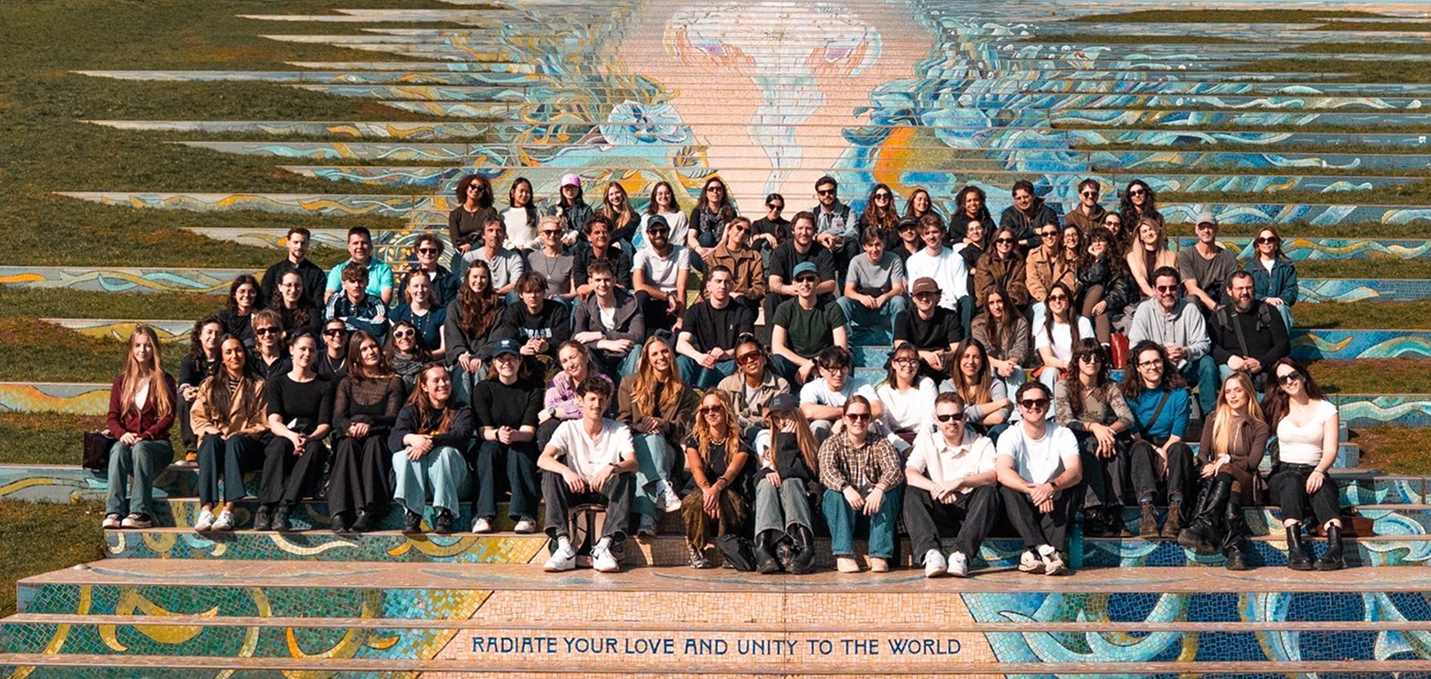
The 2026 edition, held from March 9 to 13 at the Karel de Grote University of Applied Sciences and Arts (KdG) in Antwerp, saw AANT participate with two teams, each composed of five Design and Graphic Design students and guided by professors Giulia Magaldi and Hila Narducci: Gaia Piersanti, Arianna Basile, Marco Sabino Onofri, Aurora Conte, Victoria Tronciu, Giulia Nobiloni, Aurora Cinti, Irene Palluzzi, Martina Lanotte, Jacopo Parodi.
Other participating universities included: IADE (Portugal), Hanze University of Applied Sciences Groningen (Netherlands), Algebra Bernays University College (Croatia), Hochschule der Medien Stuttgart (Germany), and KdG (Belgium).
Throughout the week, days were structured around workshops, client sessions, and teamwork, while informal moments encouraged cultural and creative exchange among international students. A dynamic environment where designing also means learning to collaborate, adapt, and create impact. Taking part in the ICDChallenge means engaging with the contemporary challenges of design: working under pressure, transforming insights into concrete solutions, and developing projects capable of addressing complex social, cultural, and technological contexts.