

geniaLAB is the interdisciplinary research laboratory dedicated to generative artificial intelligence, digital culture, cognitive technologies, and creative innovation.
The HUB brings together art, science, and critical thinking to explore the impact of emerging technologies on society, culture, and education.
With a scientific committee composed of international experts, geniaLAB promotes research projects, experimental teaching, publications, events, and collaborations with public institutions, creative industries, and centers of excellence. The HUB serves as a point of reference for training a new generation of conscious professionals and cultural innovators.
Hub Coordinator

President of the scientific committee
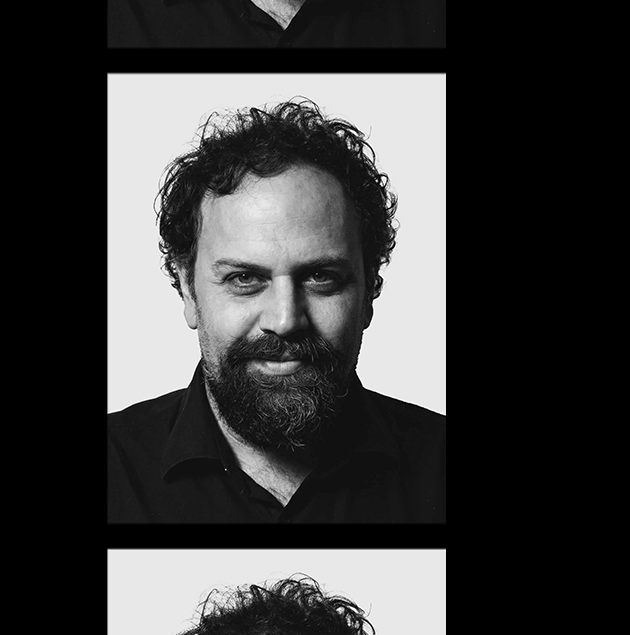
Membri del comitato scientifico
After graduating in Communication in 2002, she obtained a PhD in Cultural Sciences in Germany. Strategic agency planner for over ten years, TP Vice President from 2011 to 2014, a journalist since 2019, and president of Cr.A.Sh since 2013; she has taught since 2005 the disciplines of Semiotics of multimedia text, Theories of perception and Aesthetics of the visual arts. She has two monographs and articles published in Italian and foreign journals. Since 2019, she has been working in journalism; since 2015, she has been involved in educational planning and communication design. Since 2017, she has held the position of International Program Manager in the academic field.
Simone Arcagni (Palermo, 1970) is an academic, essayist, and journalist specializing in film, new media, and digital technologies. He is an Associate Professor at IULM University in Milan (after previously teaching at the University of Palermo) and also teaches at the Holden School in Turin. Considered one of Italy’s leading scholars of digital media, he regularly contributes to publications such as Nòva – Il Sole 24 Ore and Film TV, where he curates columns devoted to the cinema of the future.
He is the founder and editor of scientific journals such as Screencity Journal and EmergingSeries, and serves on various national and international scientific committees — including the “Web and Transmedia Strategies” board of the RAI Prix Italia and the LUM Multimedia Laboratory in Palermo.
His research interests range from computer vision to web series, from NFTs and cinema to virtual reality and the metaverse. A prolific author, he has published numerous books, including Zona Oscura: Filosofia del Metaverso (LUISS UP, 2023), Storytelling digitale (LUISS UP, 2021), and Visioni digitali. Video, web e nuove tecnologie (Einaudi, 2016) — key reference works in the study of the relationship between emerging technologies and audiovisual culture.
Maurice Benayoun (Mascara, 1957) is a French new media artist and theorist active between Paris, Hong Kong, and Nanjing. In academia, he holds prominent international positions: he has been a Full Professor at the School of Creative Media, City University of Hong Kong, since 2012 (where he served as Head of the PhD Program and the School of Graduate Studies from 2014 to 2018), and since 2024 he has been Distinguished Professor and Director of the Art & Architecture Intelligence Lab at Nanjing University in China. Previously, he taught at the University Paris 1 Panthéon-Sorbonne and Paris 8 University, where he founded the H2H (Human to Human) Laboratory for digital arts.
A pioneering multimedia artist, Benayoun is the creator of celebrated interactive installations — including Tunnel under the Atlantic (1995) and World Skin (1997) — and has received major international awards, such as the Golden Nica (Ars Electronica, 1998) for Interactive Art. In 2000, France honored him with the title of Chevalier de l’Ordre des Arts et des Lettres, in recognition of his artistic contribution.
He has delivered more than 400 invited lectures at universities and conferences worldwide and is regarded as a leading global figure in digital art and the theory of human–machine interaction.
Luna Bianchi (Udine, 1990) is an expert in technology law with an international profile that combines legal expertise and a strong ethical focus on digital innovation. A lawyer specialized in intellectual property, she has gained experience as a legal consultant in the luxury sector and has long been committed to the protection of human rights and the promotion of diversity.
Since 2019, she has focused her research on the ethical, legal, and social impacts of artificial intelligence and data use, completing a Master’s degree in Digital Philosophy aimed at developing governance models for technology grounded in digital rights and socio-economic equality.
She is the co-founder and co-CEO of Immanence, a benefit corporation that supports public and private organizations in assessing the risks and ethical impacts of algorithms and AI systems, ensuring compliance with ethical principles and European regulations. In this role, Bianchi advocates for a responsible approach to innovation, emphasizing that ethics—unlike machines—is not binary but must be negotiated and contextualized within social values.
Active as an Advocacy Officer at Privacy Network and a member of international initiatives on responsible AI, she is a frequent speaker at conferences and round tables on algorithmic transparency, digital inclusion, and data protection, contributing to the broader debate on human-centered technological innovation.
Alex Braga (Rome, 1977) is an experimental musician, conceptual artist, and inventor, regarded as a pioneer in the integration of artificial intelligence within music. Recognized for his ethical and sustainable approach to technology, in 2024 he was included in the Dizionario Enciclopedico Universale della Musica e dei Musicisti (DEUMM), acknowledging his significance among leading figures in contemporary music.
In collaboration with researchers from Roma Tre University, Braga developed A-MINT (Artificial Musical Intelligence), an adaptive AI ecosystem capable of interacting in real time with musicians through both sound and visual parameters. A-MINT became the first artificial intelligence officially recognized as a musical instrument in conservatories, studied alongside traditional instruments.
Thanks to this innovation, Braga became the first lecturer in artificial musical intelligence, teaching masterclasses at the Conservatorio di Santa Cecilia in Rome and other international institutions.
In 2020, he released the album Spleen Machine (7K! Records), created with the support of A-MINT and produced by Robert Lippok; Rolling Stone listed it among the ten best albums composed by artists using AI. His audiovisual performances—featured at renowned festivals such as Ars Electronica, Sónar, and Romaeuropa—and his installations (including Automatic Impermanence, 2024) explore the boundaries between human creativity, technology, and sustainability, inviting audiences to “find the infinite within the finite limits of our world.”
Massimo Canevacci (Rome, August 12, 1942) is an Italian anthropologist and ethnographer known for his interdisciplinary approaches to the study of communication and culture. Formerly Full Professor of Cultural Anthropology at La Sapienza University of Rome, where he taught for many years in the Faculty of Communication Sciences, he is currently a faculty member at the Institute of Advanced Studies at the University of São Paulo (Brazil).
His research combines the critical theory of the Frankfurt School with developments in cybernetic thought—particularly the work of Gregory Bateson—developing new interpretive paradigms in anthropology. Among the concepts he introduced are the “communicational metropolis,” syncretic culture, and the “ubiquitous subject,” referring to the multiple identities generated by digital media.
Canevacci has carried out extensive ethnographic research both on Indigenous cultures in Brazil (especially among the Bororo and Xavante communities) and on contemporary metropolitan life, exploring “polyphonic” urban phenomena and the transformations of visual and digital communication. A pioneer in the anthropology of communication, he has examined the intersections of art, technology, and cultural practices, while also promoting experimental teaching methodologies through new media.
He is the author of numerous works that have become disciplinary landmarks: La città polifonica (Costa & Nolan, 1997) opened new perspectives on polycentric urbanity; Antropologia della comunicazione visuale (Meltemi, 2001; new ed. 2017) explored the theme of visual fetishism; Antropologia polifonica (2012) and Soggetto ubiquo (2013) developed innovative ethnographic approaches bridging the virtual and the real. His most recent publication, Stupore indigeno (2023), examines digital challenges within Amazonian native cultures, confirming Canevacci as a leading voice in the critical analysis of contemporary anthropology.
Has dealt with communication systems and languages since the 1980s, with relationships between artistic forms, sciences, and technologies. He teaches in different institutions. From 2013 to 2018, he was the director of studies for the PhD research program of the T-Node of the Planetary Collegium (University of Plymouth). He is currently the Director and Head of scientific-cultural activities at LABA, Rimini. He has published the books “Realtà del virtuale” (1993), “Il corpo tecnologico” (1994; 2015) and “Arte e tecnologie” (1996; 2013); art*science. “The New and History” (2018); “Arte e complessità” (2018); “Dialogues across the seas: the ocean that keeps us apart also joins us. Charting knowledge and practice in the Anthropocene” (2022). In 2000, he founded Noema, of which he is Chairman, an online journal and network of projects on the relationships between arts, sciences, technologies and society. He is the founder and curator of the three-year research project art*science – Art & Climate Change on art and climate change. He has worked on European cultural projects on communication technologies. He has been part of the International Advisory Board in various editions of Ars Electronica for the Net Communities category. He is a consultant to the European Commission on relations between sciences, technologies, and humanities, particularly about big data and artificial intelligence. He is a member of AICA (Association Internationale des Critiques d ‘Art) and the Order of Journalists.
Matteo Ciastellardi (Milan, 1976) is an academic and researcher in the field of communication design and digital culture. He is currently a lecturer and researcher in the Department of Design at the Politecnico di Milano, where he teaches Sociology of Media and Sociology of Cultural Processes.
Trained as a philosopher (with a degree in Theoretical Philosophy) and holding a PhD in Communication Design, he completed a postdoctoral fellowship at the IN3 (Internet Interdisciplinary Institute) of the Universitat Oberta de Catalunya in Barcelona, under the supervision of Manuel Castells and Derrick de Kerckhove.
Upon returning to Italy with a Rita Levi Montalcini Fellowship, he joined the Politecnico di Milano as a tenure-track researcher (RTD-B), continuing his studies on new media.
He is the co-founder and editor-in-chief of the academic journal International Journal of Transmedia Literacy, a peer-reviewed open-access publication devoted to transmedia education.
His research interests include digital culture, social algorithms, transmedia literacy, big data for the humanities, and hybrid ontologies, with innovative projects such as SelfieStories, which explores youth self-representation on the internet.
Andrea Colamedici (Rome, January 12, 1987) is an Italian philosopher, essayist, and publisher active in the dissemination of contemporary thought. He is the co-founder, together with his wife Maura Gancitano, of the philosophical and editorial project Tlon. He teaches Prompt Thinking and applied creativity techniques at the Istituto Europeo di Design (IED) in Rome and at the 24Ore Business School.
He writes the weekly column Prendila con Filosofia for Vanity Fair, through which he brings philosophical ideas to a wider audience. An expert on the philosophical implications of artificial intelligence, he has given several TEDx talks — including TEDxRoma 2023 on the ethical implications of tools such as ChatGPT and TEDxBarletta 2022 on the relationship between art and AI — offering pioneering reflections on technology and humanity.
Colamedici serves as the Scientific Director of both the Festival del Pensare Contemporaneo in Piacenza and the Carnevale di Putignano, two major cultural events. Together with Gancitano, he created the Festa della Filosofia and the online initiative Prendiamola con Filosofia during the pandemic.
A versatile author, he has published essays and produced podcasts — such as Meno per meno, co-created with singer-songwriter Niccolò Fabi — exploring the intersections between philosophy and everyday life.
In 2025, he published Ipnocrazia. Trump, Musk e la nuova architettura della realtà, an experimental work co-written with the aid of artificial intelligence systems, which has attracted international attention for its innovative co-authorship process.
Received his PhD in French Language and Literature from the University of Toronto in 1974 and a PhD in Sociology of Art from the University of Tours (France) in 1979. He was an associate of the Center for Culture and Technology from 1972 to 1980 and worked with Marshall McLuhan for over ten years as a translator, assistant, and co-author. From 1983 to 2008, he directed the McLuhan Program in Culture & Technology at the University of Toronto. In Italy, he collaborated for thirteen years in the bimonthly communication magazine “Mass Media (magazine)” from 1983 to 1995—Professor of Communication Anthropology at the Politecnico di Milano. Until November 2014, he was a lecturer at the Department of Social Sciences of the University of Naples Federico II. He is currently the Scientific Director of the magazine Media Duemila and scientific advisor of the TuttiMedia Observatory. MIT Press is publishing his latest work on the Ecology of the Quantum Age.
Maura Gancitano (Mazara del Vallo, 1985) is an Italian philosopher, essayist, and public intellectual active in the field of contemporary culture. She holds a degree in Philosophy from Vita-Salute San Raffaele University in Milan and is the co-founder, together with her husband Andrea Colamedici, of Tlon—a multifaceted cultural initiative that includes a publishing house, a philosophy school, and a bookshop-theatre.
Her work focuses on philosophical and social outreach, with a particular emphasis on gender equality and the cultural impact of media. She collaborates as a columnist with national newspapers and regularly takes part in public and television debates. Alongside Colamedici, she created the Festa della Filosofia at the Triennale di Milano and Triennale di Roma, as well as Prendiamola con Filosofia, a live-streamed cultural marathon launched during the pandemic in partnership with institutions such as Rai Scuola and the Italian Ministry of Health.
Gancitano is the author of numerous acclaimed essays and podcasts. With Specchio delle mie brame. La prigione della bellezza (Einaudi, 2022), she won the Premio Rapallo per la Donna Scrittrice, and with Colamedici she co-authored the bestseller Liberati della brava bambina (HarperCollins, 2019), which explores the influence of gender stereotypes.
Thanks to her innovative contributions, she has been included in Vanity Fair’s “Generazione Futuro” list and among StartUpItalia’s Unstoppable Women, recognitions that celebrate emerging voices of Italian and European innovation.
Marco Gori (Florence, 1961) is an Italian computer scientist and internationally renowned expert in artificial intelligence. He has been a Full Professor of Computer Science at the University of Siena since 2000, where he directs the SAILAB – Artificial Intelligence Laboratory. He earned his Ph.D. from the University of Bologna and completed part of his training at McGill University in Montréal. Over more than three decades of academic career, he has also taught at the University of Florence and served as a visiting professor at several international universities, including Montréal, Ulm, and Paris VI.
His main research interests include machine learning, computer vision, and natural language processing. Gori has served as president of both the Italian Chapter of the IEEE Computational Intelligence Society and the Italian Association for Artificial Intelligence (AI*IA). He is a Fellow of IEEE, EurAI (formerly ECCAI), and IAPR, honors that acknowledge his outstanding scientific contributions.
He has authored hundreds of scientific publications and several key texts, including Web Dragons: Inside the Myths of Search Engine Technology (Morgan Kaufmann, 2007, co-authored) and Machine Learning: A Constraint-Based Approach (Morgan Kaufmann, 2018), which presents an innovative paradigm of machine learning developed in his lab.
In 2004, he launched WebCrow, a pioneering human–machine challenge for solving crossword puzzles, which later inspired the creation of QuestIT, a startup specializing in conversational agents. Listed among the Top Italian Scientists in the field of Computer Science, Marco Gori is regarded as one of Italy’s foremost experts in artificial intelligence, actively engaged in international research and technology transfer projects.
Sabina Minardi (Catania, 1970) is an Italian journalist and writer. Since 2016, she has been the head of the cultural section of the weekly magazine L’Espresso. A graduate in Law from LUISS Guido Carli University in Rome, she is the author of publications on legal informatics and privacy law. She began her journalistic career at La Repubblica, contributing to the launch of the Repubblica.it portal in 1996–97.
She has received several major awards, including the Putto d’Argento (2005) for “Children and the Press,” awarded by the Italian Order of Journalists, and the Nino Martoglio International Literary Prize (2017).
Minardi is the artistic director of the Marzamemi Book Fest, a literary festival in Sicily. Her publications include the historical novel Caterina della notte (Piemme, 2017) and the non-fiction volume Il grande libro del vintage (Il Saggiatore, 2021), as well as contributions to the Treccani Encyclopedia and numerous essays and articles on culture, society, and lifestyle.
She regularly gives lectures on cultural journalism and has created media formats and web series (such as BookZ) to promote reading among young audiences.